Stress Management
Stress Management: Staying Resilient in a Fast-Paced World
Welcome back to another edition of Next-Level Skills. Each edition, we explore the human and leadership capabilities that help us navigate work and life more effectively. Skills that move beyond theory and into practical application.
A warm welcome to everyone who has joined our community since the last edition. Whether you've been with us since the beginning or have recently discovered the newsletter or the book, thank you for being part of this journey.
This week, we focus on Stress Management, a skill that can determine whether we navigate challenges with composure or feel overwhelmed by them. Stress is inevitable, but how we respond to it makes all the difference. Those who master stress management don’t just survive high-pressure situations — they thrive in them.
When Pressure Nearly Got the Best of Me
Once I remember, I was juggling multiple deadlines, back-to-back meetings, and a high-stakes presentation for a major client. The pressure was immense, and I convinced myself that powering through without taking breaks was the only way to get everything done.
Then, the unexpected happened — during a crucial meeting, I completely blanked on key figures I had rehearsed a dozen times. My mind was overloaded, and stress had taken its toll. After an awkward silence, I recovered, but the experience was a wake-up call:
I needed to manage stress, and not let it manage me.
From that point on, I started using simple but effective strategies — prioritising tasks, taking mindful breaks, and shifting my perspective on pressure. The result?
What is Stress, Really?
Stress is our body’s natural response to challenges, uncertainty, or pressure. It isn’t inherently bad — some stress can enhance focus, motivation, and performance. However, when stress becomes chronic or overwhelming, it negatively impacts our well-being, decision-making, and effectiveness.
It’s not stress that kills us, it is our reaction to it.
— Hans Selye, the pioneer of stress research
Managing stress isn’t about eliminating it — it’s about developing the right tools to handle it constructively.
Why Stress Management Matters
Stress is a natural part of life, but unmanaged stress can impact our productivity, well-being, and decision-making. Learning to handle stress effectively allows us to stay focused, perform at our best, and maintain a sense of control in challenging situations.
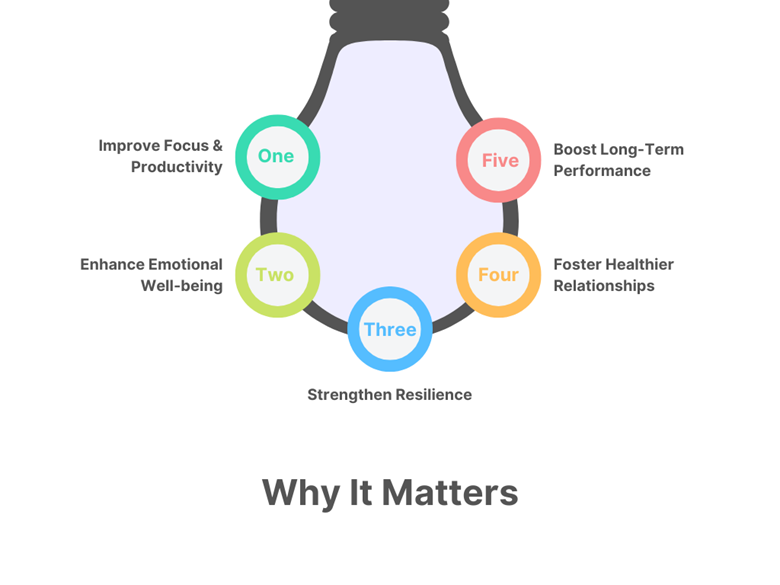
Developing strong stress management skills helps us:
1. Improve Focus & Productivity – A clear mind makes better decisions and completes tasks more efficiently.
2. Enhance Emotional Well-being – Managing stress reduces anxiety and burnout.
3. Strengthen Resilience – Learning to handle pressure builds confidence in tackling future challenges.
4. Foster Healthier Relationships – When stress is controlled, we communicate more effectively and reduce conflicts.
5. Boost Long-Term Performance – Those who manage stress well sustain high performance without burnout.
Understanding the importance of stress management is the first step — next, we need to learn how to implement it effectively.
The Key Elements of Effective Stress Management
Managing stress effectively requires a combination of self-awareness, perspective, and practical strategies. By focusing on key elements such as emotional regulation, time management, and physical well-being, we can develop a healthier response to pressure.
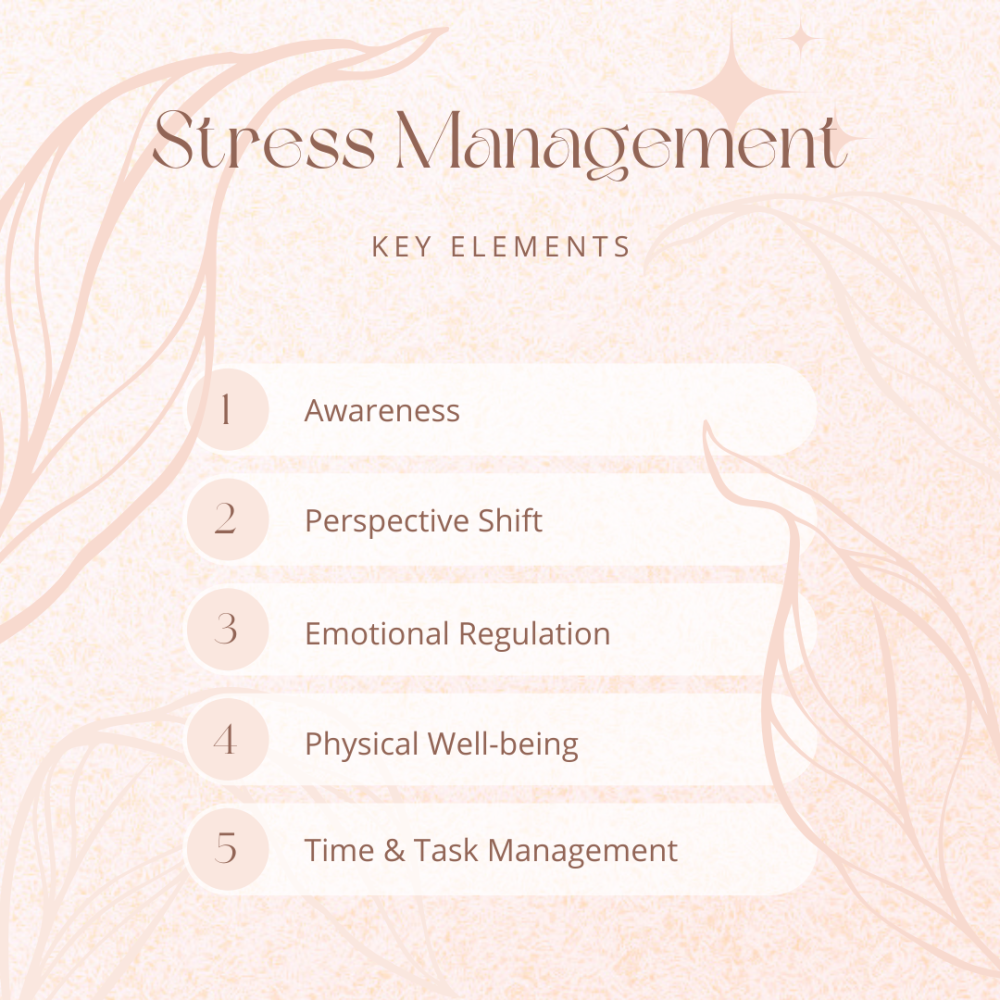
Key elements include:
1. Awareness – Recognising stress triggers and early warning signs.
2. Perspective Shift – Reframing stress as a challenge rather than a threat.
3. Emotional Regulation – Managing reactions through mindfulness and self-awareness.
4. Physical Well-being – Prioritising sleep, exercise, and nutrition to counteract stress.
5. Time & Task Management – Organising workload to reduce unnecessary pressure.
When these elements work together, they create a strong foundation for maintaining balance and control, even in high-pressure situations.
Now, let’s explore practical strategies that help us apply these principles in our daily lives.
Pro Tips for Managing Stress Effectively
Effectively managing stress is about adopting small but powerful habits that help us stay calm, focused, and resilient. These strategies are designed to help us navigate pressure with clarity and maintain peak performance even in high-stakes situations.
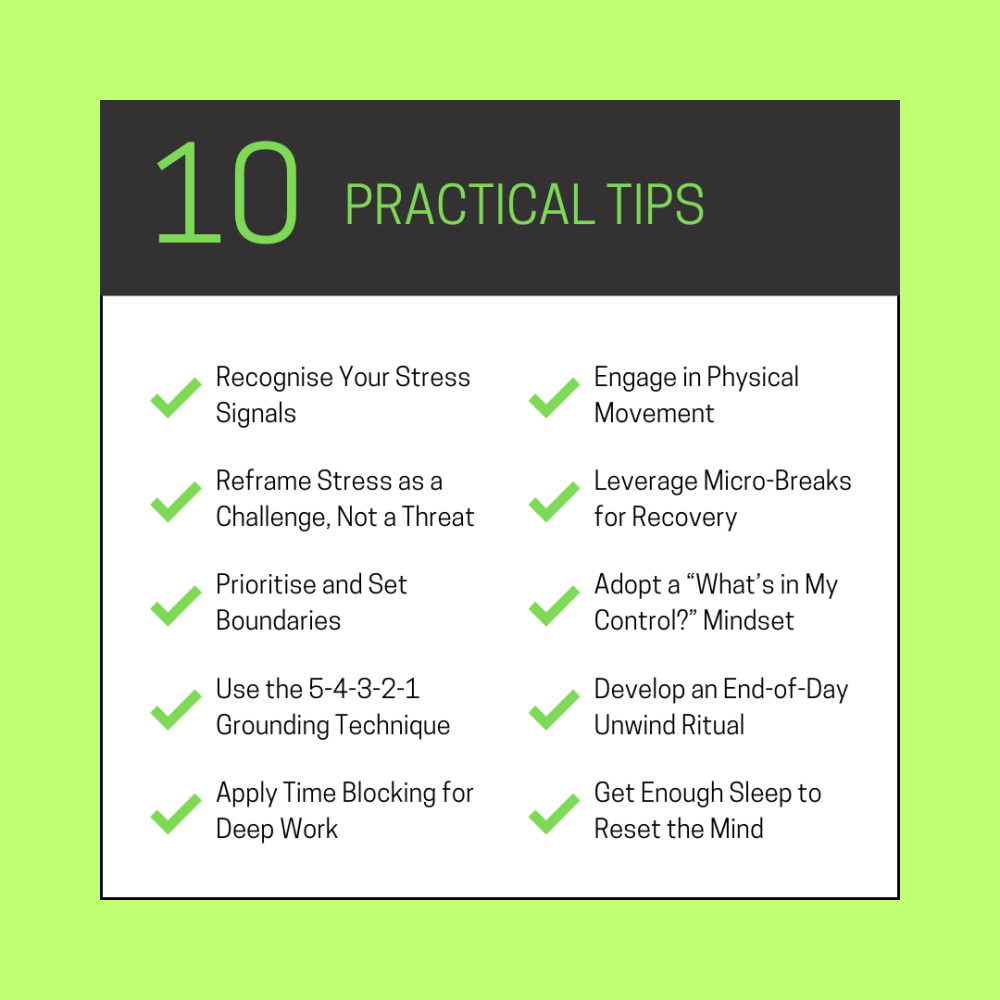
Recognise Your Stress Signals
Identifying how stress manifests — physically, emotionally, or mentally — allows us to take early action.
Pro Tip: If tension headaches or irritability signal stress, pause and practise deep breathing before it escalates.
Reframe Stress as a Challenge, Not a Threat
Changing our perspective on stress can shift it from overwhelming to motivating.
Pro Tip: Instead of thinking, “This is too much,” reframe it as, “This is an opportunity to grow and improve.”
Prioritise and Set Boundaries
Not every task is urgent — learning to prioritise effectively reduces unnecessary pressure.
Pro Tip: If emails are overwhelming, batch them into two focused sessions per day rather than constantly checking.
Use the 5-4-3-2-1 Grounding Technique
Engaging the senses helps calm the nervous system and regain focus in stressful moments.
Pro Tip: Identify five things you see, four things you feel, three things you hear, two things you smell, and one thing you taste.
Apply Time Blocking for Deep Work
Multitasking increases stress — dedicating focused time blocks improves efficiency and reduces mental overload.
Pro Tip: Schedule 90-minute deep work sessions followed by short breaks to maintain productivity.
Engage in Physical Movement
Regular exercise, even in small doses, reduces stress hormones and improves mental clarity.
Pro Tip: A short walk between meetings or light stretching at your desk can refresh both mind and body.
Leverage Micro-Breaks for Recovery
Brief pauses throughout the day help prevent burnout and maintain concentration.
Pro Tip: Every 60–90 minutes, step away from your desk for 2–5 minutes to reset.
Adopt a “What’s in My Control?” Mindset
Focusing on what we can influence instead of dwelling on external factors reduces anxiety.
Pro Tip: If a deadline shifts unexpectedly, focus on adjusting priorities rather than stressing over the change itself.
Develop an End-of-Day Unwind Ritual
Separating work from personal time helps prevent stress from lingering after hours.
Pro Tip: Create a ritual — journaling, reading, or a short walk — to mentally close the workday.
Get Enough Sleep to Reset the Mind
Quality sleep is one of the most powerful ways to manage stress and enhance performance.
Pro Tip: Establish a bedtime routine — reduce screen time and practise relaxation techniques before bed.
By consistently applying these strategies, we train ourselves to handle stress more effectively and maintain control in challenging situations. Now, let’s take this a step further with a simple challenge to strengthen our stress management skills this week.
This and other essential skills are covered in Next-Level Skills — the book.
Learn more about the Book →A Challenge
This week, choose one stress management technique to implement in your daily routine. It could be:
Reflection Questions
Some Final Thoughts...
Stress is an inevitable part of life, but managing it effectively allows us to stay focused, resilient, and in control. By applying practical strategies, we can turn stress from an enemy into a motivator for growth.
Between stimulus and response, there is a space. In that space is our power to choose our response. In our response lies our growth and our freedom.
— Viktor Frankl
Thank you for being part of Next-Level Skills! What’s your go-to stress management strategy? Let’s exchange ideas and learn from each other.
Until Next Time,
Abhishek
Founder & CEO, LegiQ | Building Intelligent Edge Hardware
How do we stay calm and focused under high-pressure situations?
What role does mindset play in managing stress?
How can leaders create a less stressful work environment for their teams?
How do we balance pushing ourselves for growth while avoiding burnout?
What’s the biggest workplace stressor you’ve faced, and how did you handle it?
What’s one small habit that has helped you manage stress effectively?
How do we prevent minor stressors from building up into overwhelming pressure?
What’s a time when stress helped you perform better rather than hold you back?
How do we distinguish between productive stress and harmful stress?
What’s the most unconventional stress management technique you’ve tried?
Buy the Book
- ✓Learn the full Next-Level Skills framework.
- ✓Build clarity, influence, and decision-making strength.
- ✓Accelerate your personal and professional growth.
This and other essential skills are covered in Next-Level Skills — the book.
Learn more about the Book →This edition is reserved for supporters
Subscribe free, then unlock every past edition with just 1 successful referral.
Subscribe Free →Enjoyed this edition?
Get the next one in your inbox — first week of every month.