Team Building
The Chemistry of Cohesion - Building Teams That Click
Welcome back to another edition of Next-Level Skills. Each edition, we explore the human and leadership capabilities that help us navigate work and life more effectively. Skills that move beyond theory and into practical application.
A warm welcome to everyone who has joined our community since the last edition. Whether you've been with us since the beginning or have recently discovered the newsletter or the book, thank you for being part of this journey.
This week, we turn the spotlight to Team Building, a deceptively simple term that carries complex undertones. Building teams isn’t just about gathering the right people, it’s about igniting the right dynamics.
Let’s unpack how high-trust, high-performance teams are intentionally built, not accidentally formed.
The Week We Left Titles Behind
Some years back, our team flew into Darwin expecting heat, crocs, and maybe a few beers at sunset. What we didn’t expect was how deeply the week would pull us out of our roles, and into real connection.
On day two, we found ourselves ankle-deep in red dirt, learning to throw spears in the bush with a local guide. Our head of operations, normally polished and precise, couldn’t hit a thing, but he laughed louder than we’d ever heard in a boardroom. Later, around the fire, someone shared a story of burnout. Another quietly admitted to feeling overlooked.
By the time we hit Mindil Beach for our final dinner, something had shifted. We weren’t just peers anymore, we were people who’d sweated together, failed at silly challenges together, and shared space without agendas.
That week in Darwin stripped back our polish, our email personas, and our assumptions.
Why Team Building is a Strategic Muscle, Not a Side Quest
Too often, team building is treated like an HR checkbox : one-off icebreakers, awkward Zoom quizzes, or Friday drinks. But real team building is embedded, not event-based.
It’s not about forced fun. It’s about crafting alignment, belonging, and shared energy.
Not finance. Not strategy. Not technology. It is teamwork that remains the ultimate competitive advantage.
— Patrick Lencioni
Without trust, even the most talented group becomes a misfiring machine.
So, how do we transform teams from transactional groups into thriving, connected units?
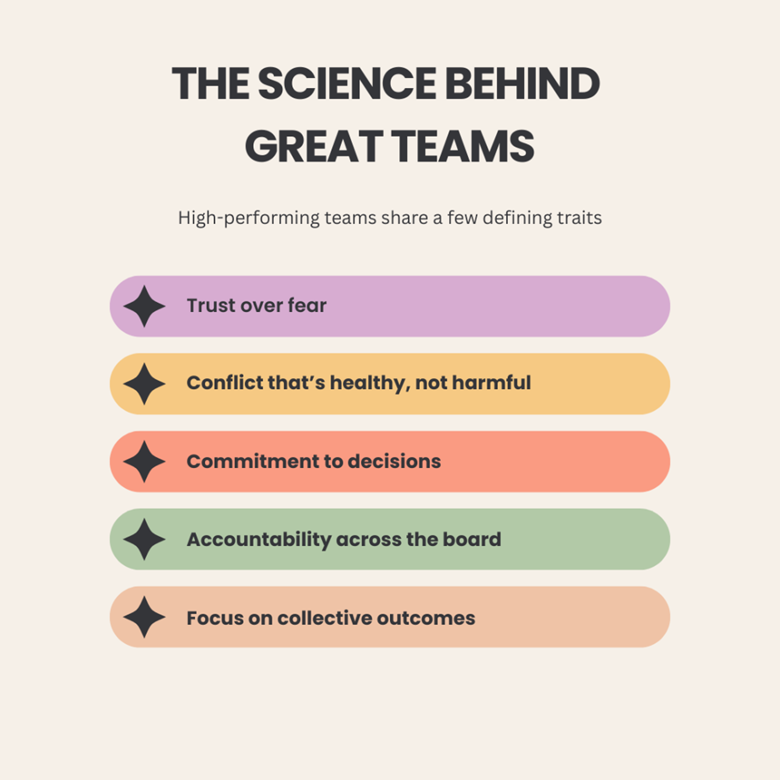
These aren’t just soft traits.
Let’s look at what those actions are.
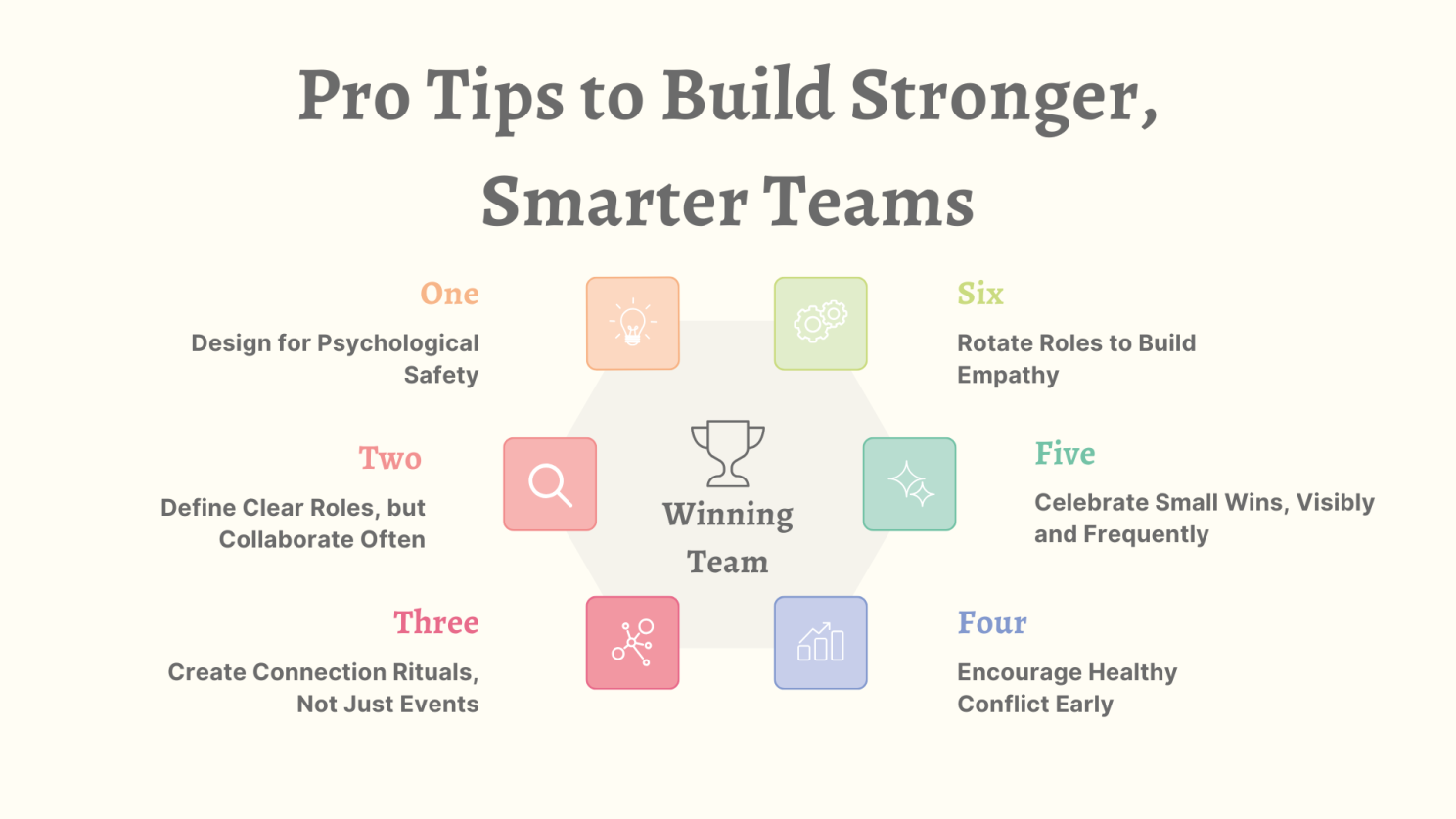
1. Design for Psychological Safety
Teams thrive when we feel safe to speak, ask, and fail without fear of judgement. Leaders must model this, by admitting mistakes, asking for input, and encouraging dissenting views.
2. Define Clear Roles, but Collaborate Often
Clarity reduces confusion, while collaboration builds trust. Ensure everyone knows their lane, but create overlap through co-working rituals.
3. Create Connection Rituals, Not Just Events
Instead of the annual team offsite, introduce lightweight weekly rituals, like 10-minute “energy check-ins” or rotating shout-outs.
4. Encourage Healthy Conflict Early
Conflict isn’t the enemy, avoidance is. Normalise disagreement by inviting alternative views before decisions are made.
5. Celebrate Small Wins, Visibly and Frequently
Recognition fuels momentum. Publicly celebrating micro-successes reminds the team that progress matters.
6. Rotate Roles to Build Empathy
Let team members step into each other’s shoes, whether by shadowing or leading a meeting. Empathy skyrockets when we experience each other’s challenges.
This and other essential skills are covered in Next-Level Skills — the book.
Learn more about the Book →A Challenge
Let’s bring this into action:
Reflection Questions
Some Final Thoughts...
Team building isn’t about ping-pong tables or personality quizzes. It’s about the invisible glue - trust, safety, and shared momentum.
Alone we can do so little; together we can do so much.
— Helen Keller
We don’t need perfect teams, we need human teams, fuelled by trust and aligned in purpose. And that’s built one conversation, one ritual, one moment at a time.
Here’s to building teams that aren’t just productive, but magnetic.
Until Next Time,
Abhishek
Founder & CEO, LegiQ | Building Intelligent Edge Hardware
If we left our team today, what’s the one cultural value we’d hope would remain?
What does a “great team” mean to each of us and are we aligned in that vision?
When was the last time someone on our team surprised us in a good way?
What’s a small team ritual we could introduce that might have a big impact?
What kind of conflict do we fear most in our team and why?
Have we ever avoided conflict in the name of “keeping peace”? What did that cost us?
How do we personally contribute to (or hinder) psychological safety on our team?
Do we truly know each other beyond our job titles? What’s stopping us from getting there?
What’s one habit our team has that strengthens trust and one that erodes it?
How does our team celebrate wins? Could it be more meaningful?
Apply These Skills
- ✓Put the frameworks into practice this month.
- ✓Use the reflection prompts inside the book.
- ✓Build habits that compound over time.
This and other essential skills are covered in Next-Level Skills — the book.
Learn more about the Book →This edition is reserved for supporters
Subscribe free, then unlock every past edition with just 1 successful referral.
Subscribe Free →Enjoyed this edition?
Get the next one in your inbox — first week of every month.