Prioritisation
The Power of Prioritisation - Choosing What Truly Matters
Welcome back to another edition of Next-Level Skills. Each edition, we explore the human and leadership capabilities that help us navigate work and life more effectively. Skills that move beyond theory and into practical application.
A warm welcome to everyone who has joined our community since the last edition. Whether you've been with us since the beginning or have recently discovered the newsletter or the book, thank you for being part of this journey.
This week’s focus is one that affects everything else we do: Prioritisation.
It’s not just about productivity. It’s about clarity.
The Task That Almost Derailed the Team
During a major product rollout, our team was juggling multiple streams - marketing approvals, tech testing, client communication, and executive reviews. Everyone was moving fast, and everything seemed urgent. Until one day, we missed a critical client insight that was buried in a less urgent email thread.
That oversight triggered a delay and forced a full rework of our timeline.
Looking back, it wasn’t poor execution.
It was poor prioritisation. We had been reacting instead of ranking.
Why Prioritisation Is a Strategic Skill
When everything feels important, nothing truly is.
Prioritisation is not about doing more in less time : it’s about doing what matters most with the clarity to let go of the rest.
The key is not to prioritise what’s on our schedule but to schedule our priorities.
— Stephen Covey
In the workplace, those who master this skill become reliable decision-makers, calm under pressure, and deeply trusted by leaders.
Let’s explore how to apply it practically in our own environments.
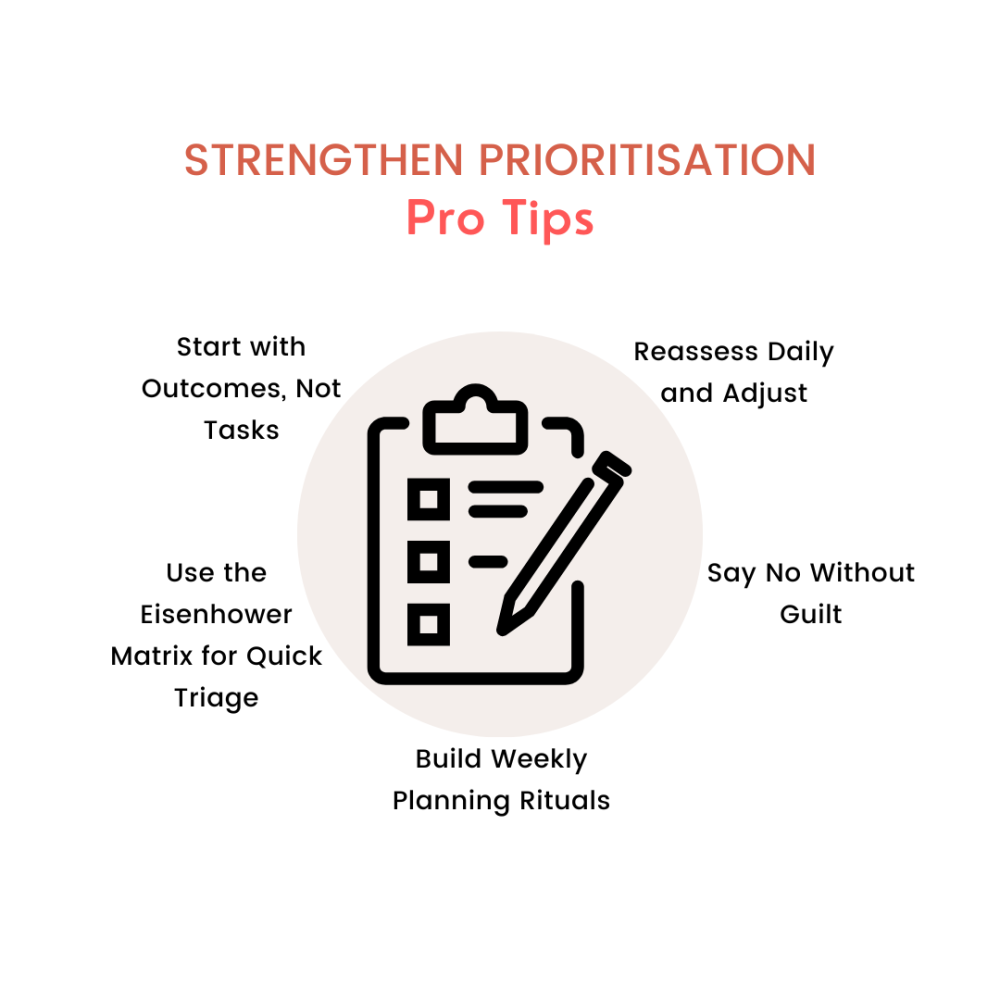
1. Start with Outcomes, Not Tasks
Pro Tip: Anchor every to-do list in outcomes. Before diving into action, ask: What’s the result we’re trying to achieve?
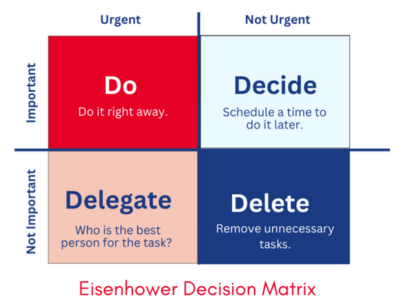
2. Use the Eisenhower Matrix for Quick Triage
Pro Tip: Categorise tasks by urgency and importance:
- →Urgent and important: do now
- →Important but not urgent: schedule
- →Urgent but not important: delegate
- →Neither: eliminate
3. Build Weekly Planning Rituals
Pro Tip: Begin each week by defining top priorities based on strategic goals. Review meetings, deadlines, and projects to block focused time accordingly.
4. Say No Without Guilt
Pro Tip: Every “yes” costs us time. Protecting our top priorities requires respectfully declining what doesn’t align. Reframe “no” as “not now” or suggest an alternative timeline.
5. Reassess Daily and Adjust
Pro Tip: Priorities shift. Take five minutes at the end of each day to review progress and recalibrate. What moved forward? What needs more time tomorrow?
This and other essential skills are covered in Next-Level Skills — the book.
Learn more about the Book →A Challenge
Try these small but mighty actions this week:
Reflection Questions
Some Final Thoughts...
Mastering prioritisation is about more than efficiency. It’s a mindset. One that helps us focus our energy on what drives real change, build stronger boundaries, and reduce decision fatigue.
If we don’t prioritise our life, someone else will.
— Greg McKeown writes in Essentialism
Let’s choose what deserves our time - before our time gets chosen for us.
Until Next Time,
Abhishek
Founder & CEO, LegiQ | Building Intelligent Edge Hardware
How do we decide what’s urgent versus what’s truly important?
What could change if we gave our highest priority task our best energy every day?
What are we currently prioritising that doesn’t align with our long-term goals?
Are we letting others’ urgency override our own clarity?
What’s one thing we’ve been doing that we need to stop to make space for better work?
Do we review our priorities regularly or set them once and forget?
What is the cost of constantly switching between tasks without ranking them?
What systems help us stay focused on the right things daily?
How would our calendar look if we designed it around priorities instead of meetings?
Have we communicated our top priorities to those around us?
Apply These Skills
- ✓Put the frameworks into practice this month.
- ✓Use the reflection prompts inside the book.
- ✓Build habits that compound over time.
This and other essential skills are covered in Next-Level Skills — the book.
Learn more about the Book →This edition is reserved for supporters
Subscribe free, then unlock every past edition with just 1 successful referral.
Subscribe Free →Enjoyed this edition?
Get the next one in your inbox — first week of every month.