Networking
More Than Business Cards: The Human Skill of Networking
Welcome back to another edition of Next-Level Skills. Each edition, we explore the human and leadership capabilities that help us navigate work and life more effectively. Skills that move beyond theory and into practical application.
A warm welcome to everyone who has joined our community since the last edition. Whether you've been with us since the beginning or have recently discovered the newsletter or the book, thank you for being part of this journey.
Today we’re diving into a skill that’s often misunderstood and occasionally undervalued: Networking.
Not the cold, transactional kind. But the warm, meaningful kind that builds bridges, not business cards.
The Unexpected Connection That Came in Handy Later
A few years ago, I found myself at an industry breakfast. I didn’t feel like going. I was buried in a project, mentally fatigued, and convinced I had nothing to gain.
But I went.
I sat next to someone I didn’t know, struck up a light conversation over coffee, and ended up learning something that helped me unlock a challenge we were wrestling with for weeks at work. Months later, that same person became a partner on a major initiative.
That wasn’t luck. That was the quiet power of showing up and being open.
Why Networking Isn’t What We Think It Is
Many of us picture networking as loud rooms, awkward small talk, and people exchanging contacts they’ll never use. That’s the outdated model.
Real networking is relationship-building with intention. It’s about being curious, being useful, and being remembered.
The fastest way to change yourself is to hang out with people who are already the way you want to be.
— Reid Hoffman, founder of LinkedIn
When we stop treating networking as an event and start treating it as a habit, it becomes a tool for growth, not a task to dread.
Types of Networks We All Need
Strong networks are diverse, layered, and dynamic. It helps to think of them in three categories.
- 1OperationalThese are the colleagues and partners we work with regularly. We rely on each other to get things done.
- 2PersonalTrusted mentors, coaches, and peers who help us reflect, learn, and stay grounded.
- 3StrategicThese are forward-looking connections that open doors, challenge thinking, and help us see what’s coming next.
Each network plays a different role. The goal isn’t to know everyone.
Let’s explore now how to do that well.
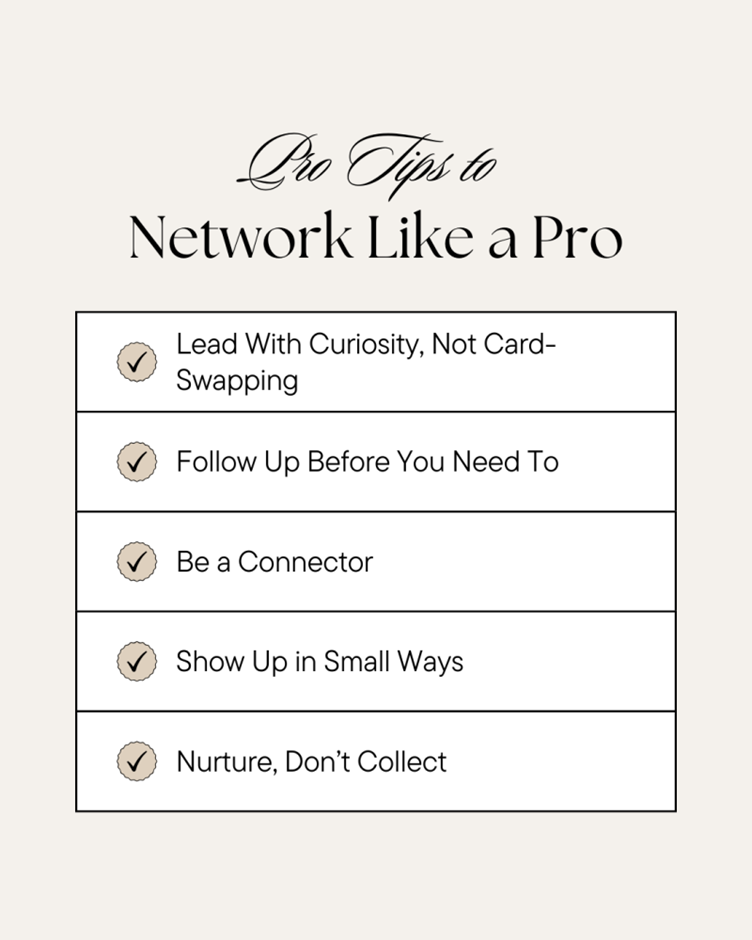
- 1Pro Tip 1: Lead With Curiosity, Not Card-SwappingInstead of thinking “What can I get from this person?”, ask “What can I learn from them?” Curiosity builds stronger bridges than credentials ever will.
- 2Pro Tip 2: Follow Up Before You Need ToWe often reach out only when we need help. Instead, drop a message to say thanks, share something relevant, or congratulate someone on their work. People remember how we made them feel.
- 3Pro Tip 3: Be a ConnectorIntroduce people who should know each other. It makes us memorable and expands goodwill in our network.
- 4Pro Tip 4: Show Up in Small WaysComment thoughtfully on someone’s post. Send a relevant article. Share a resource. These micro-connections build macro trust.
- 5Pro Tip 5: Nurture, Don’t CollecA small number of meaningful relationships beats a large contact list. Focus on building depth over breadth.
Networking in the Digital Age
In-person events are great, but digital platforms have levelled the playing field.
LinkedIn is no longer just a CV site. It’s a learning and connecting platform. Communities on Slack, Teams, Substack, and Discord are also great spaces for meaningful exchange.
This and other essential skills are covered in Next-Level Skills — the book.
Learn more about the Book →A Challenge
Try one of these three things to build stronger networks:
Reflection Questions
Some Final Thoughts...
Networking isn’t about climbing. It’s about connecting. When we view relationships as opportunities to learn, give, and grow, everything changes.
In a world driven by algorithms and automations, it’s our human touch that stands out. Let’s not network for visibility. Let’s network for value, for ourselves and for others.
And remember, the best time to build our network is before we need it. The second-best time is now.
What are your thoughts on effective and warm networking? Would love to hear from you!
Until Next Time,
Abhishek
Founder & CEO, LegiQ | Building Intelligent Edge Hardware
What’s one professional relationship that changed the course of our career?
How do we feel about networking - genuine opportunity or chore to avoid?
Who are three people we admire that we haven’t spoken to recently?
Are we better at starting new connections or nurturing existing ones?
What does “adding value” mean in our network?
What platforms or spaces have we found most useful for authentic networking?
How can we move beyond surface-level LinkedIn engagement?
Do we have a mentor or are we being one to someone else?
How often do we help others build their network?
If someone asked, “How do we build relationships that matter?”, what would we say?
Apply These Skills
- ✓Put the frameworks into practice this month.
- ✓Use the reflection prompts inside the book.
- ✓Build habits that compound over time.
This and other essential skills are covered in Next-Level Skills — the book.
Learn more about the Book →This edition is reserved for supporters
Subscribe free, then unlock every past edition with just 1 successful referral.
Subscribe Free →Enjoyed this edition?
Get the next one in your inbox — first week of every month.