Building a Feedback Culture
Making Feedback a Habit, Not a Headache!
Welcome back to another edition of Next-Level Skills. Each edition, we explore the human and leadership capabilities that help us navigate work and life more effectively. Skills that move beyond theory and into practical application.
A warm welcome to everyone who has joined our community since the last edition. Whether you've been with us since the beginning or have recently discovered the newsletter or the book, thank you for being part of this journey.
This week we focus on Building a Feedback Culture, a skill that transforms teams from groups of individuals into engines of continuous learning.
When Honest Words Changed the Game
A few years ago, I worked with a project team that was missing deadlines and struggling with miscommunication. In one tense meeting, a junior team member bravely said, “We don’t give each other feedback until it’s too late.”
Instead of reacting defensively, the team lead paused, acknowledged the point, and invited everyone to share observations - both good and bad. That single moment unlocked a flood of honest insights.
Processes improved, trust deepened, and performance soared within weeks.
The lesson?
Why Feedback Matters
Feedback creates a continuous loop of improvement.
It helps us see blind spots, sharpen strengths, and align actions with shared goals. Without feedback, organisations risk stagnation - people keep repeating the same mistakes while opportunities for excellence slip by.
Feedback is the breakfast of champions.
— Ken Blanchard
A culture that welcomes feedback builds resilience and accelerates learning.
The Pillars of a Strong Feedback Culture
Creating a feedback-driven environment requires more than occasional performance reviews. It demands trust, openness, and consistent practice.
Teams with a healthy feedback culture exhibit three key traits:
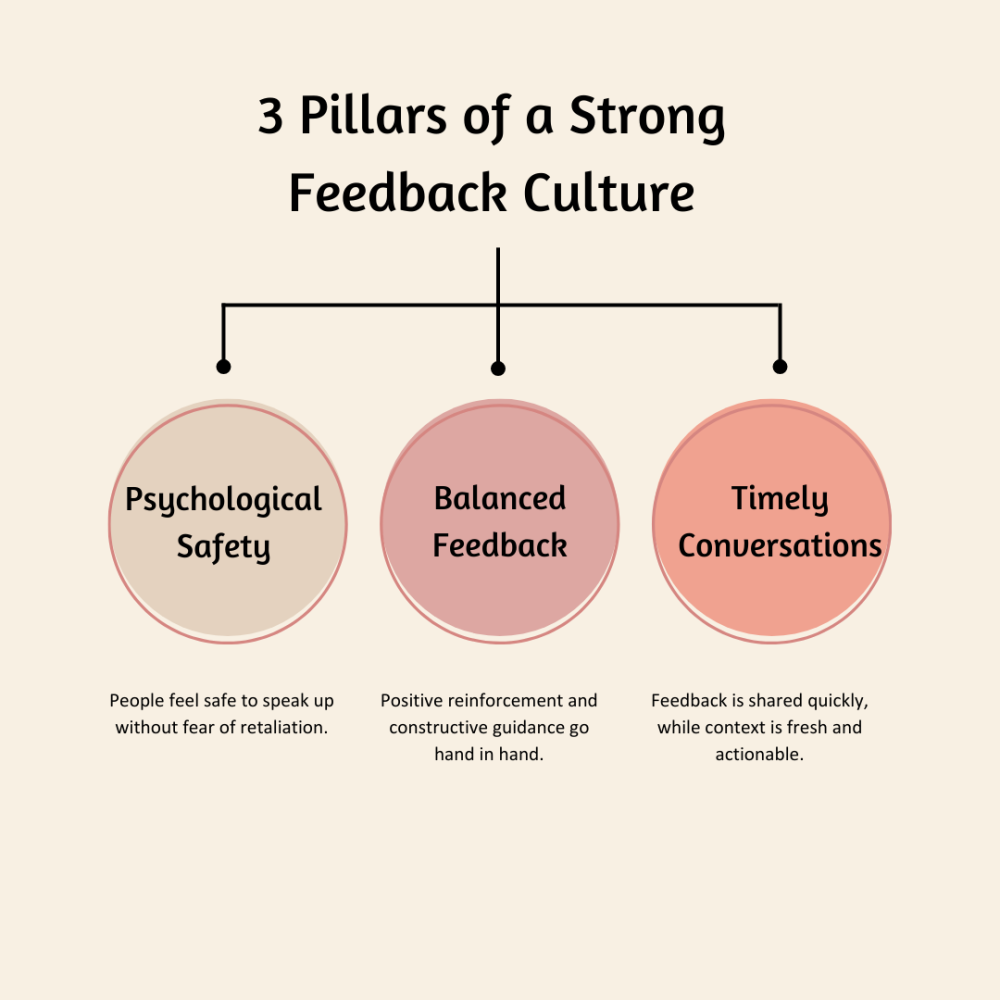
When these pillars are in place, feedback becomes an everyday habit rather than a dreaded event.
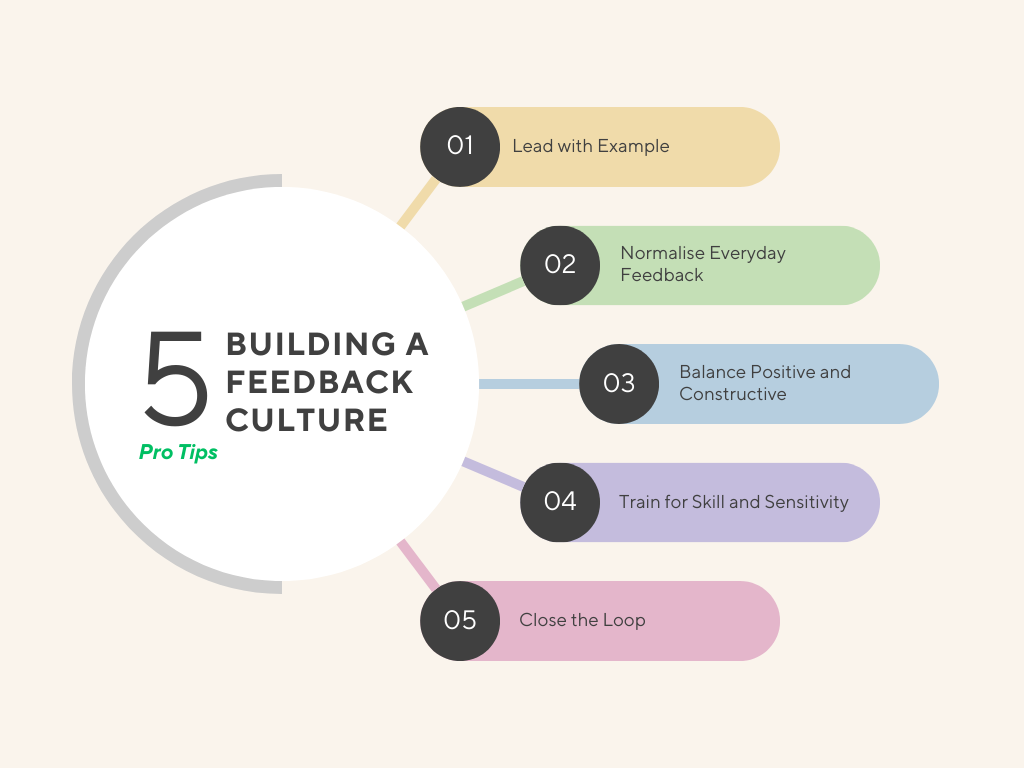
1. Lead with Example
Feedback culture starts at the top. Leaders who actively seek feedback signal that it is valued and safe.
Pro Tip: Regularly ask, “What’s one thing I could do better this week?” and act on the suggestions.
2. Normalise Everyday Feedback
Formal reviews once a year are not enough. Make feedback part of daily interactions.
Pro Tip: Encourage quick, informal check-ins after meetings or projects to discuss what worked and what could improve.
3. Balance Positive and Constructive
Too much focus on negatives discourages people, while only praising leaves gaps unaddressed.
Pro Tip: Use the 3-to-1 ratio - three affirmations for every constructive suggestion - to keep feedback motivating.
4. Train for Skill and Sensitivity
Effective feedback requires both honesty and empathy.
Pro Tip: Offer team training on giving and receiving feedback, focusing on clear language, active listening, and respect.
5. Close the Loop
Feedback only drives change when it leads to action.
Pro Tip: After sharing input, agree on next steps and revisit progress in follow-up discussions.
Real-World Study
Companies like Adobe recognised the limits of annual performance reviews and made a bold shift. In 2012, they introduced regular “check-ins” focused on setting expectations, coaching, and continuous feedback instead of once-a-year evaluations (Stanford Graduate School of Business).
The result?
Higher engagement, faster development, and stronger retention - proof that small, frequent conversations create big, lasting impact.
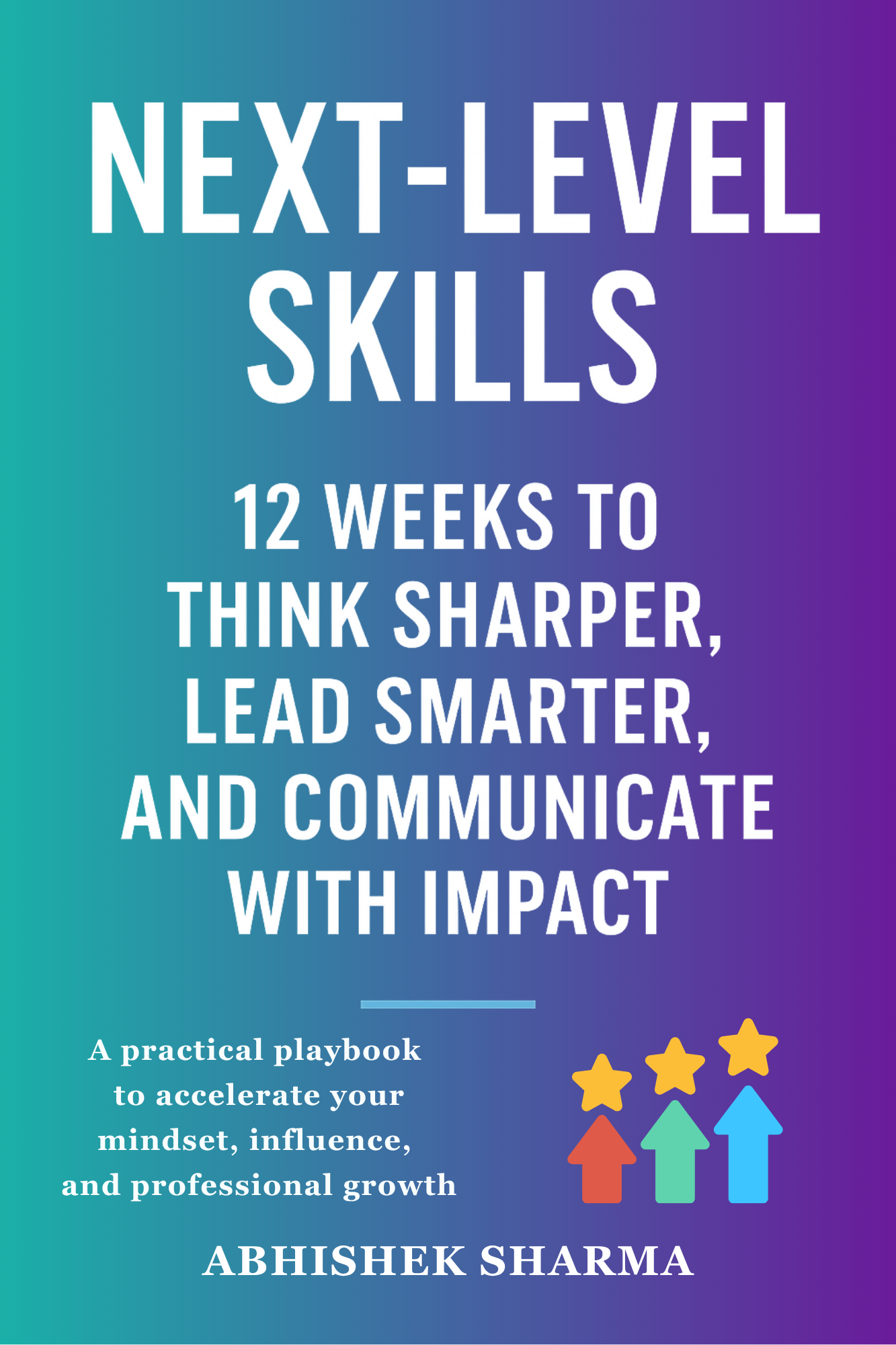
This and other essential skills are covered in Next-Level Skills — the book.
Learn more about the Book →A Challenge
This week, identify one person whose work you value and share specific positive feedback with them. Then, ask for one piece of feedback on something you’re working on.
Simple steps like these build trust and lay the foundation for a culture of openness.
Some Final Thoughts...
A true feedback culture is not about pointing out flaws. It is about helping each other grow stronger, smarter, and more capable.
We all need people who will give us feedback. That’s how we improve.
— Bill Gates
Let’s commit to creating environments where feedback is not feared but embraced as the key to growth.
Until Next Time,
Abhishek
Founder & CEO, LegiQ | Building Intelligent Edge Hardware
How often does your team share feedback outside of formal reviews?
How do cultural differences influence how feedback is given or received?
What tools or rituals help your team maintain regular feedback loops?
What role should leaders play in modelling feedback behaviour?
Have you ever received feedback that completely changed your approach?
How can we balance positive reinforcement with constructive critique?
How do you ensure feedback conversations remain constructive?
What stops people from offering feedback even when they see issues?
What is the best piece of feedback you have ever received?
What one change could make feedback more natural in your workplace?
Buy the Book
- ✓Learn the full Next-Level Skills framework.
- ✓Build clarity, influence, and decision-making strength.
- ✓Accelerate your personal and professional growth.
This and other essential skills are covered in Next-Level Skills — the book.
Learn more about the Book →This edition is reserved for supporters
Subscribe free, then unlock every past edition with just 1 successful referral.
Subscribe Free →Enjoyed this edition?
Get the next one in your inbox — first week of every month.