Conflict Resolution
Conflict Resolution: Turning Tension into Opportunity
Welcome back to another edition of Next-Level Skills. Each edition, we explore the human and leadership capabilities that help us navigate work and life more effectively. Skills that move beyond theory and into practical application.
A warm welcome to everyone who has joined our community since the last edition. Whether you've been with us since the beginning or have recently discovered the newsletter or the book, thank you for being part of this journey.
This week’s topic is Conflict Resolution, a skill that helps us navigate disagreements, foster understanding, and turn moments of tension into opportunities for growth. In every workplace, conflict is inevitable, but how we approach it determines whether it hinders progress or becomes a stepping stone to better outcomes.
Let’s begin with a story that redefined the way I view conflicts.
When a Disagreement Led to Innovation
Years ago, I worked on a project where two key stakeholders clashed over the product’s direction. One advocated for prioritising cost efficiency, while the other insisted on adding premium features to appeal to a niche market. Meetings became tense, and progress stalled as the team became divided.
Recognising the impasse, I stepped in to mediate. I facilitated a structured discussion where each side articulated their priorities and underlying concerns. By reframing the conflict as an opportunity to explore creative solutions, we identified a middle ground: offering a scalable product with a baseline version and optional premium add-ons.
Not only did this resolution propel the project forward, but it also strengthened the team’s ability to collaborate under pressure.
What is Conflict Resolution?
Conflict resolution is the process of addressing and resolving disagreements constructively, focusing on mutual understanding and shared goals. It requires empathy, active listening, and a willingness to collaborate.
Don’t raise your voice, improve your argument.
— Desmond Tutu
Resolving conflict is less about winning debates and more about finding solutions that work for everyone.
Why Conflict Resolution Matters
Although being the inevitable, how we handle conflict makes all the difference. Addressing conflicts constructively can strengthen relationships, foster innovation, and improve team dynamics. When approached with the right mindset and skills, conflict resolution becomes a powerful tool for growth and collaboration.
Here’s why it’s critical. It —
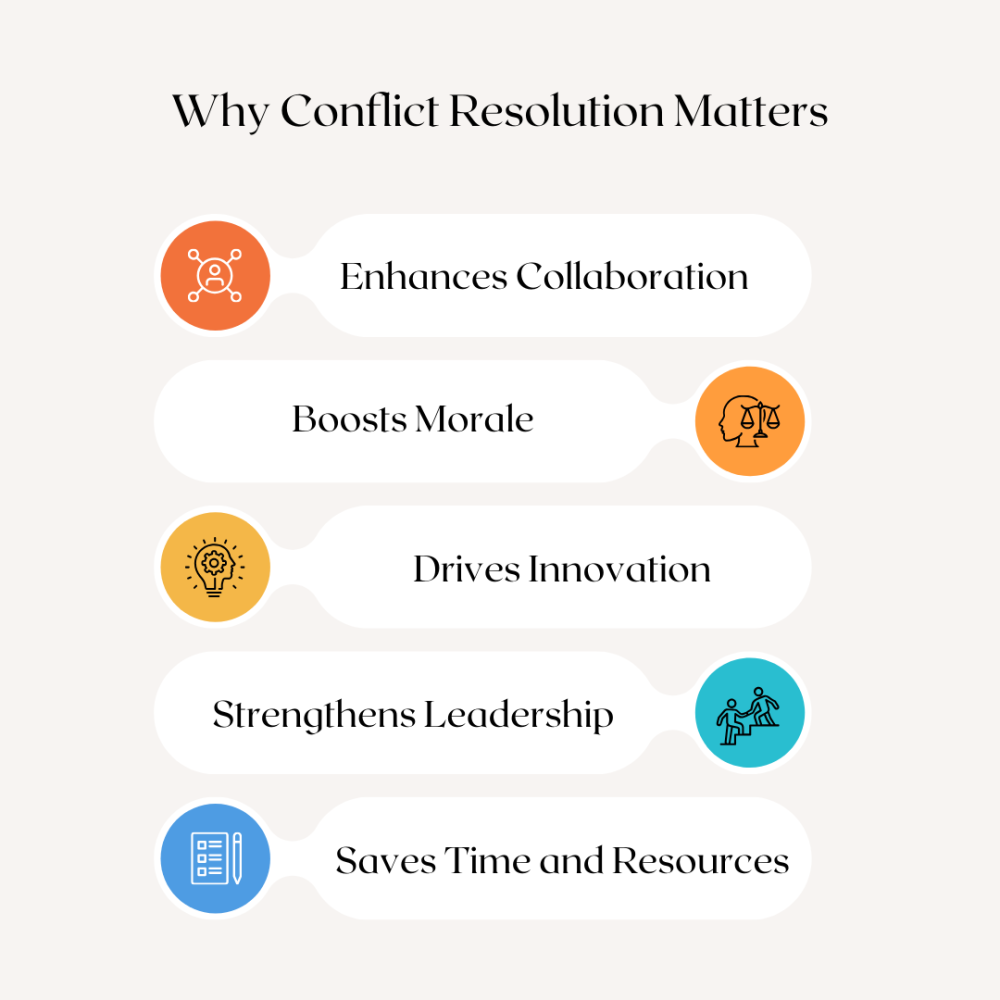
- 1Enhances CollaborationResolving conflicts builds trust and creates stronger, more cohesive teams.
- 2Boosts MoraleAddressing tensions promptly reduces stress and improves the overall work environment.
- 3Drives InnovationProductive disagreements can lead to fresh perspectives and creative solutions.
- 4Strengthens LeadershipLeaders who resolve conflicts effectively earn respect and credibility.
- 5Saves Time and ResourcesResolving disputes early prevents escalation and minimises disruptions.
By recognising the importance of resolving conflicts effectively, we unlock opportunities to create healthier work environments and stronger professional bonds. With this understanding, let’s delve into the foundational principles that guide successful conflict resolution.
Principles of Effective Conflict Resolution
Effective conflict resolution relies on a strong foundation of principles that guide how we approach disagreements. These principles help us remain focused on solutions, foster mutual respect, and ensure productive outcomes. By understanding and practising these principles without fail, we create an environment where conflicts become opportunities for growth rather than sources of stress.
Let's have a look at these foundational principles:
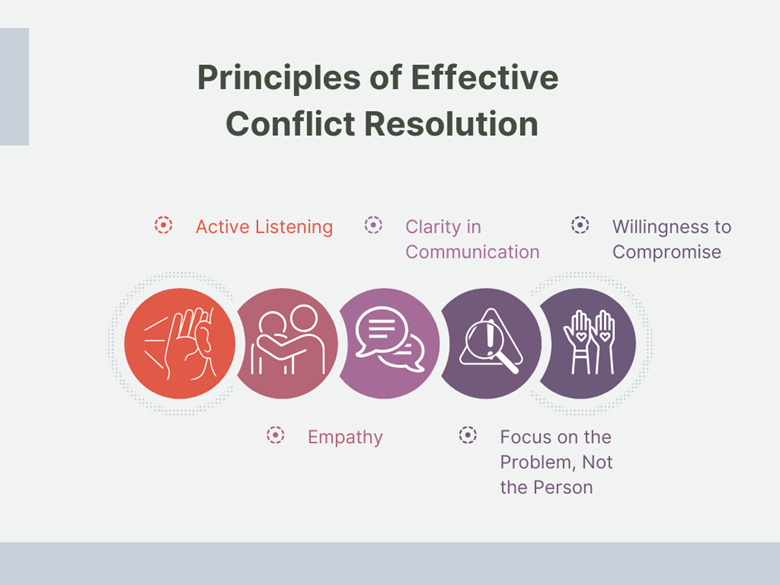
- 1Active ListeningUnderstanding others’ perspectives is key to addressing their concerns effectively.
- 2EmpathyRecognising emotions helps de-escalate tension and fosters trust.
- 3Clarity in CommunicationClear, concise communication reduces misunderstandings.
- 4Focus on the Problem, Not the PersonTargeting the issue, not individuals, creates a collaborative atmosphere.
- 5Willingness to CompromiseFinding common ground ensures mutually beneficial outcomes.
With these principles in mind, let’s explore practical strategies to put them into action in our daily interactions.
Practical Tips for Conflict Resolution
While principles provide the foundation, it’s the practical application that turns conflict resolution into a valuable skill.
By adopting actionable strategies, we can approach disagreements with confidence and transform challenges into collaborative opportunities.
Let's dive into a few of these practical tips to address conflicts constructively, ensuring we navigate them with clarity and purpose —
1. Proactively Address Conflicts
Ignoring conflict allows it to grow and worsen. Addressing disagreements early prevents escalation and builds trust.
Pro Tip: If two team members have conflicting priorities, organise a one-on-one discussion to clarify their goals and find alignment before the issue affects the broader team.
2. Stay Calm and Objective
Emotions can escalate conflicts, so maintaining composure is crucial for constructive resolution.
Pro Tip: When receiving heated feedback, take a deep breath and respond with, “I hear your concerns — let’s discuss how we can address them together.”
3. Encourage Open Dialogue
Create a safe space for everyone involved to share their perspectives without fear of judgement.
Pro Tip: During a conflict, set ground rules for respectful communication, such as one person speaking at a time and avoiding personal attacks.
4. Seek to Understand Before Being Understood
Focus on genuinely understanding the other person’s perspective before presenting our own viewpoint.
Pro Tip: Use phrases like, “Can you help me understand what’s most important to you in this situation?” This approach fosters empathy and reduces defensiveness.
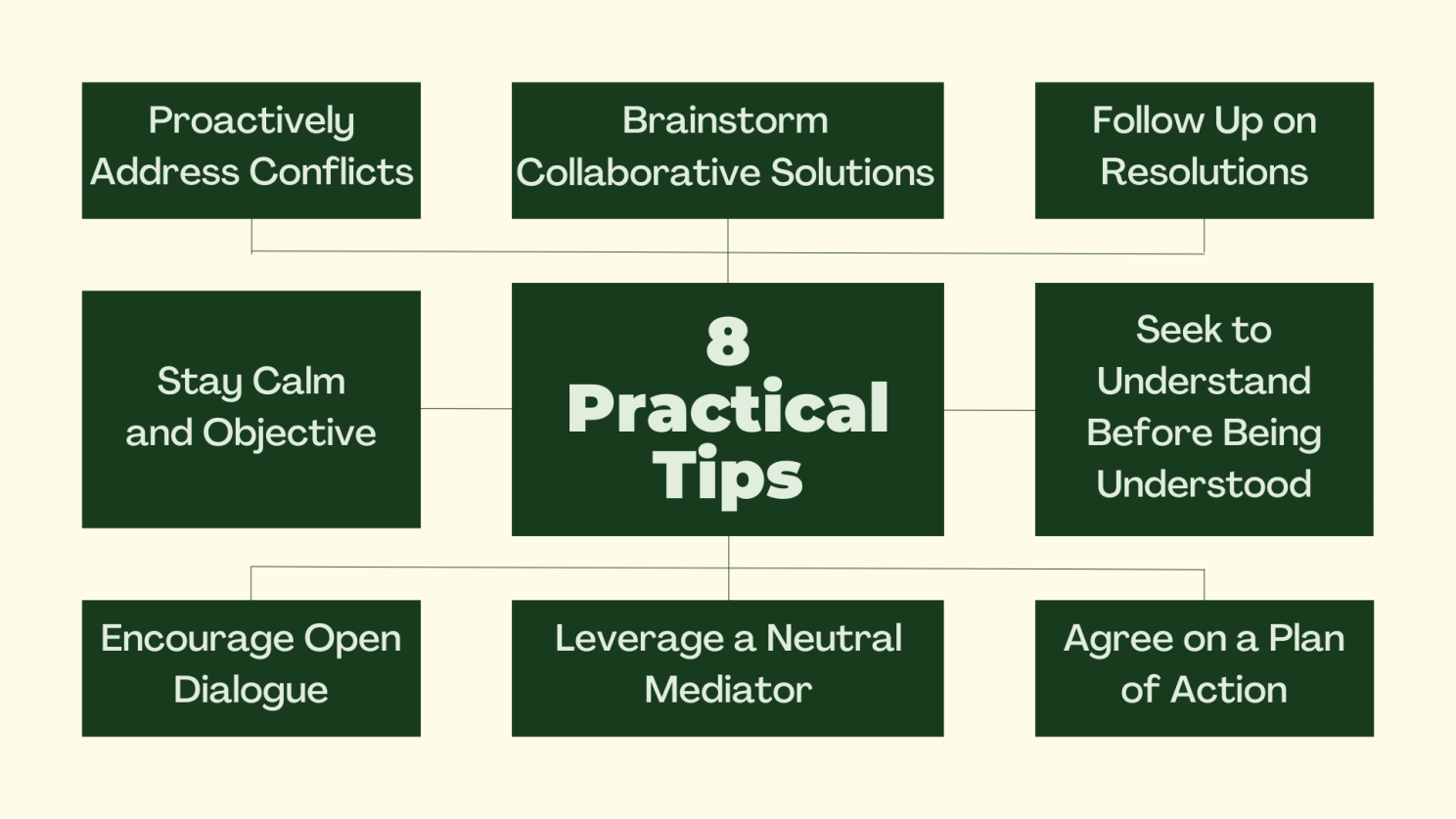
5. Brainstorm Collaborative Solutions
Shift the focus from assigning blame to finding solutions that benefit everyone.
Pro Tip: If a team member is struggling with workload conflicts, collaborate on redistributing tasks or setting new priorities that align with team goals.
6. Leverage a Neutral Mediator
When conflicts become deeply entrenched, involving a neutral third party can help facilitate resolution.
Pro Tip: Engage a manager or HR representative to mediate disputes objectively, ensuring all voices are heard.
7. Agree on a Plan of Action
Resolution isn’t complete without a clear action plan that outlines next steps and responsibilities.
Pro Tip: After resolving a disagreement over deadlines, document the new timeline, assign tasks, and confirm agreement among all parties.
8. Follow Up on Resolutions
Check in with the parties involved to ensure the solution is working and adjust if necessary.
Pro Tip: After mediating a conflict, schedule a follow-up meeting in a week to discuss progress and any remaining concerns.
When implemented consistently, these practical tips can turn moments of tension into opportunities for connection and growth.
These tips equip us to handle conflicts with empathy, composure, and a solution-oriented mindset.
One important step, in making these tips to good use, is an honest self-reflection on how are we going through managing conflicts and what steps we can take to be more effective in managing the future 'inevitable' conflicts.
This and other essential skills are covered in Next-Level Skills — the book.
Learn more about the Book →A Challenge
Let’s reflect on how we can apply these techniques to our own situations through a simple challenge for the week. Think of a recent or ongoing conflict in a professional or personal setting. Reflect on how it was addressed and ask yourself:
Reflection Questions
This week, choose one practical tip — such as staying calm or encouraging open dialogue — and apply it to a challenging situation.
Some Final Thoughts...
Conflict is inevitable, but its outcomes are not.
By approaching disagreements with empathy, clarity, and a focus on collaboration, we can turn tension into opportunities for growth, innovation, and stronger relationships.
The quality of our lives depends not on whether or not we have conflicts, but on how we respond to them.
— Thomas Crum
By mastering conflict resolution, we empower ourselves to navigate challenges with confidence and transform them into meaningful outcomes.
Thank you for being part of Next-Level Skills! Let’s continue learning, sharing, and growing together.
Until Next Time,
Abhishek
Founder & CEO, LegiQ | Building Intelligent Edge Hardware
What’s a memorable conflict you successfully resolved, and what made it work?
Can you recall a situation where unresolved conflict negatively impacted team performance? What could have been done differently?
What’s the hardest part about staying calm during a heated disagreement, and how do you manage it?
What strategies have you found most effective for resolving workplace conflicts?
How do leaders model effective conflict resolution for their teams?
How can we foster a culture where conflicts are seen as opportunities for growth?
How do we ensure emotions don’t overpower reason during a conflict?
What’s one conflict resolution strategy you’d like to strengthen, and why?
What role does empathy play in resolving disagreements effectively?
How do we balance resolving conflicts quickly with ensuring all perspectives are heard?
Apply These Skills
- ✓Put the frameworks into practice this month.
- ✓Use the reflection prompts inside the book.
- ✓Build habits that compound over time.
This and other essential skills are covered in Next-Level Skills — the book.
Learn more about the Book →This edition is reserved for supporters
Subscribe free, then unlock every past edition with just 1 successful referral.
Subscribe Free →Enjoyed this edition?
Get the next one in your inbox — first week of every month.