Empathy
Empathy The Bridge That Builds Trust
Welcome back to another edition of Next-Level Skills. Each edition, we explore the human and leadership capabilities that help us navigate work and life more effectively. Skills that move beyond theory and into practical application.
A warm welcome to everyone who has joined our community since the last edition. Whether you've been with us since the beginning or have recently discovered the newsletter or the book, thank you for being part of this journey.
Today, we dive into empathy – a skill often spoken about, but rarely practised in depth.
When Silence Spoke Louder Than Words
A few years ago, I watched a manager respond to a team member’s quiet distress. Instead of pressing for answers, she simply sat beside them in silence until they spoke. That small act – giving space, not rushing, not trying to fix things immediately – built trust that transformed the relationship.
Sometimes empathy is less about what we say and more about the patience to truly listen.
Why Empathy Matters in Leadership and Life
Empathy is not a soft skill – it is a leadership multiplier.
When we practise empathy, we unlock trust, strengthen collaboration, and reduce conflict.
Research indicates that leaders who demonstrate empathy and compassion can reduce workplace stress, thereby increasing overall employee well-being and job satisfaction. Reference : Boyatzis, R. E., & McKee, A. (2005). Resonant Leadership: Renewing Yourself and Connecting with Others Through Mindfulness, Hope, and Compassion. Harvard Business School Press.
Similarly, Catalyst reports that employees led by highly empathic senior leaders register significantly higher engagement (76%) and innovation (61%), compared to those under less empathetic leaders.
Empathy is about finding echoes of another person in yourself.
— Mohsin Hamid
The truth is, empathy is not just about kindness – it’s about creating a culture where people thrive.
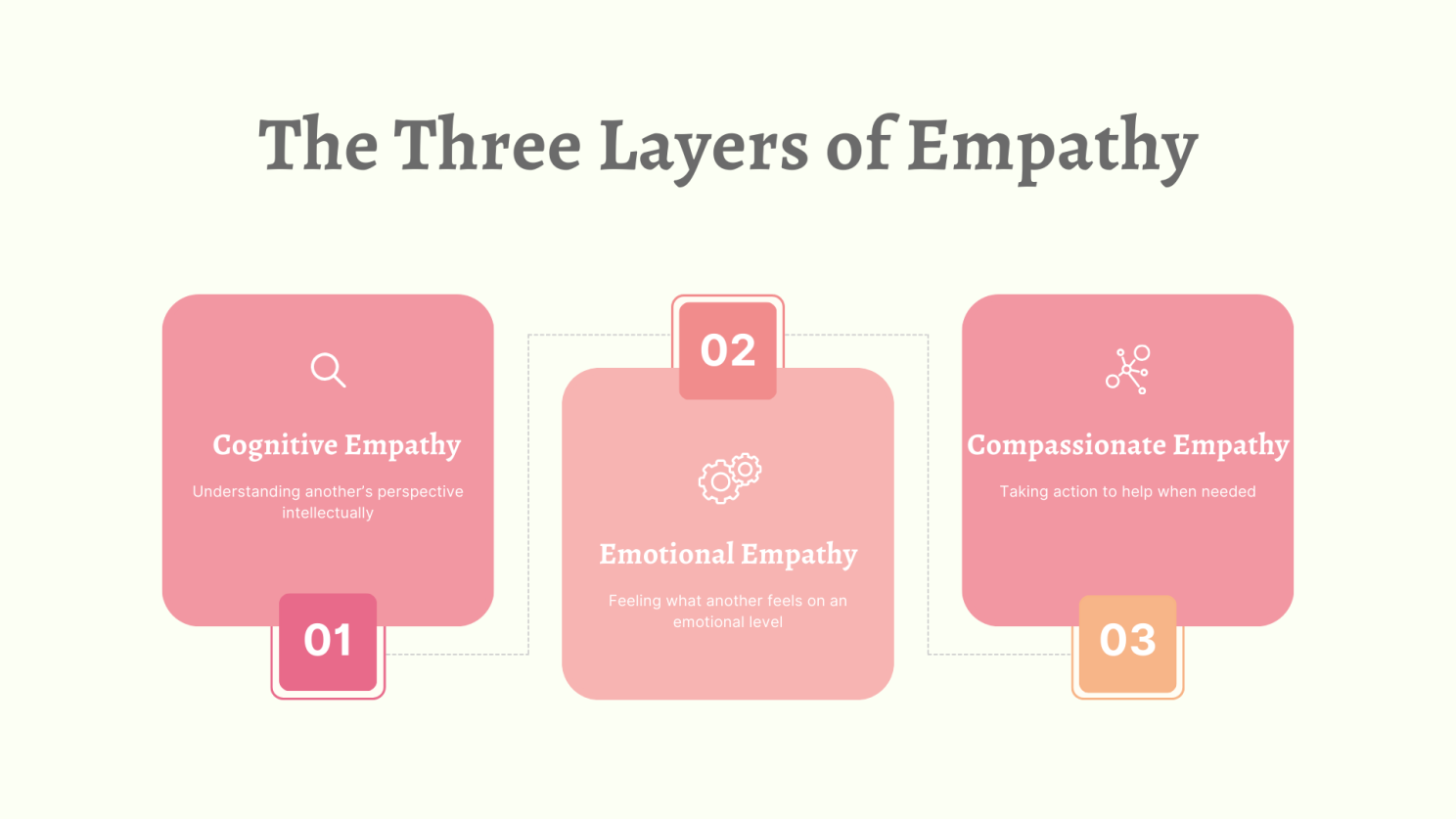
It unfolds in stages, each adding depth to how we connect with others and influence outcomes. When we recognise and practise all three, we don’t just understand people better : we build trust, resolve conflict more effectively, and create environments where others feel truly valued.
Cognitive Empathy
This is about perspective-taking. It allows us to intellectually understand another’s thoughts, motivations, and point of view, even if we don’t share them. For example, in a team meeting, cognitive empathy helps us see why a colleague might resist change, not because they are difficult, but because they value stability.
Emotional Empathy
Here we step into the feelings of others. It’s when we can sense the frustration in someone’s tone or the joy in their excitement and feel it with them. This level of empathy strengthens human bonds, showing others that their emotions are not only noticed but acknowledged as real and valid.
Compassionate Empathy
The final layer moves us from understanding and feeling to doing. Compassionate empathy pushes us to take constructive action, whether that’s offering support, creating solutions, or simply being present when someone needs it. It transforms empathy from passive awareness into meaningful impact.
Together, these 3 layers form a powerful toolkit for great leaders.
Practised well, they elevate us from surface-level sympathy to authentic, transformative connection. And when applied consistently, they can shift the culture of entire teams and organisations.
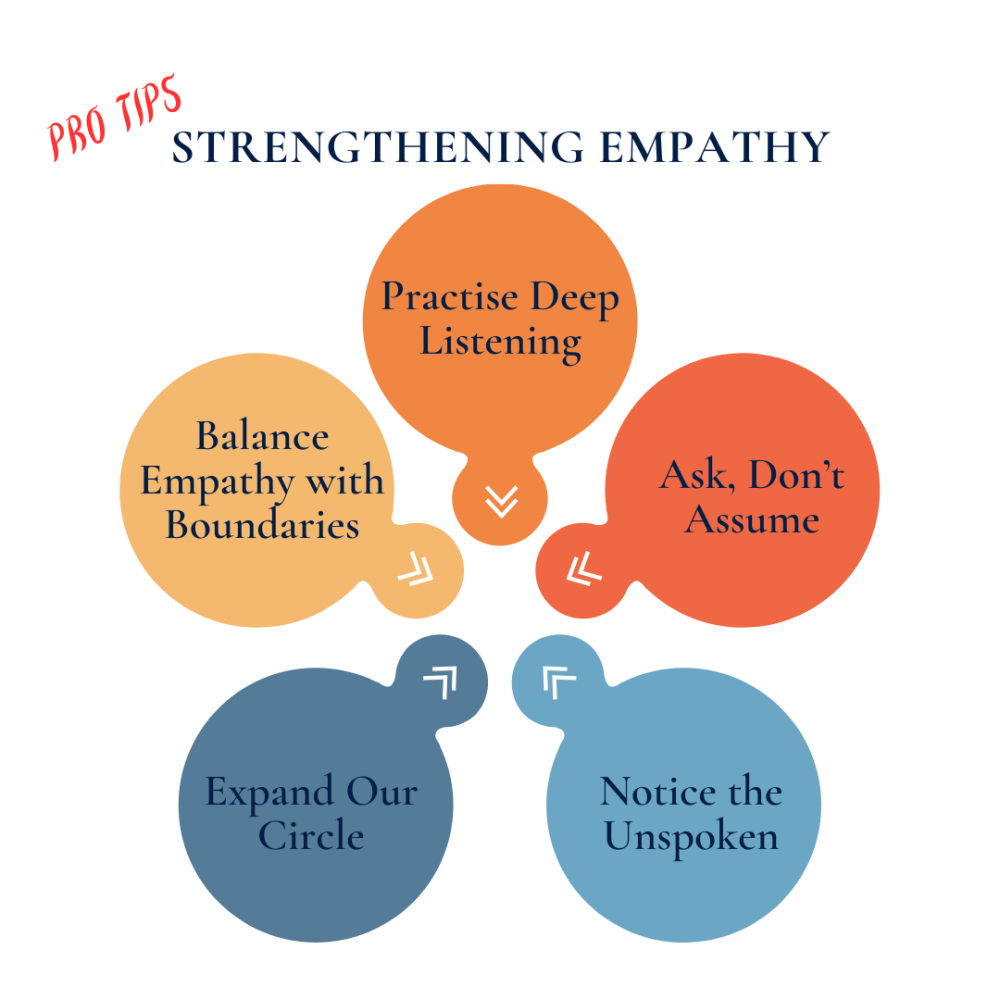
Pro Tip #1: Practise Deep Listening
Instead of preparing our response, focus fully on what the other person is saying.
Pause before speaking.
Pro Tip #2: Ask, Don’t Assume
Clarify how someone feels instead of jumping to conclusions.
Simple questions like “How can I best support you?” open doors.
Pro Tip #3: Notice the Unspoken
Empathy often lives in body language, tone, or silence.
Observing these cues helps us respond with care.
Pro Tip #4: Expand Our Circle
Engage with people from different backgrounds and experiences.
Exposure broadens perspective and empathy.
Pro Tip #5: Balance Empathy with Boundaries
Empathy doesn’t mean absorbing others’ struggles.
It means supporting without losing our own emotional grounding.
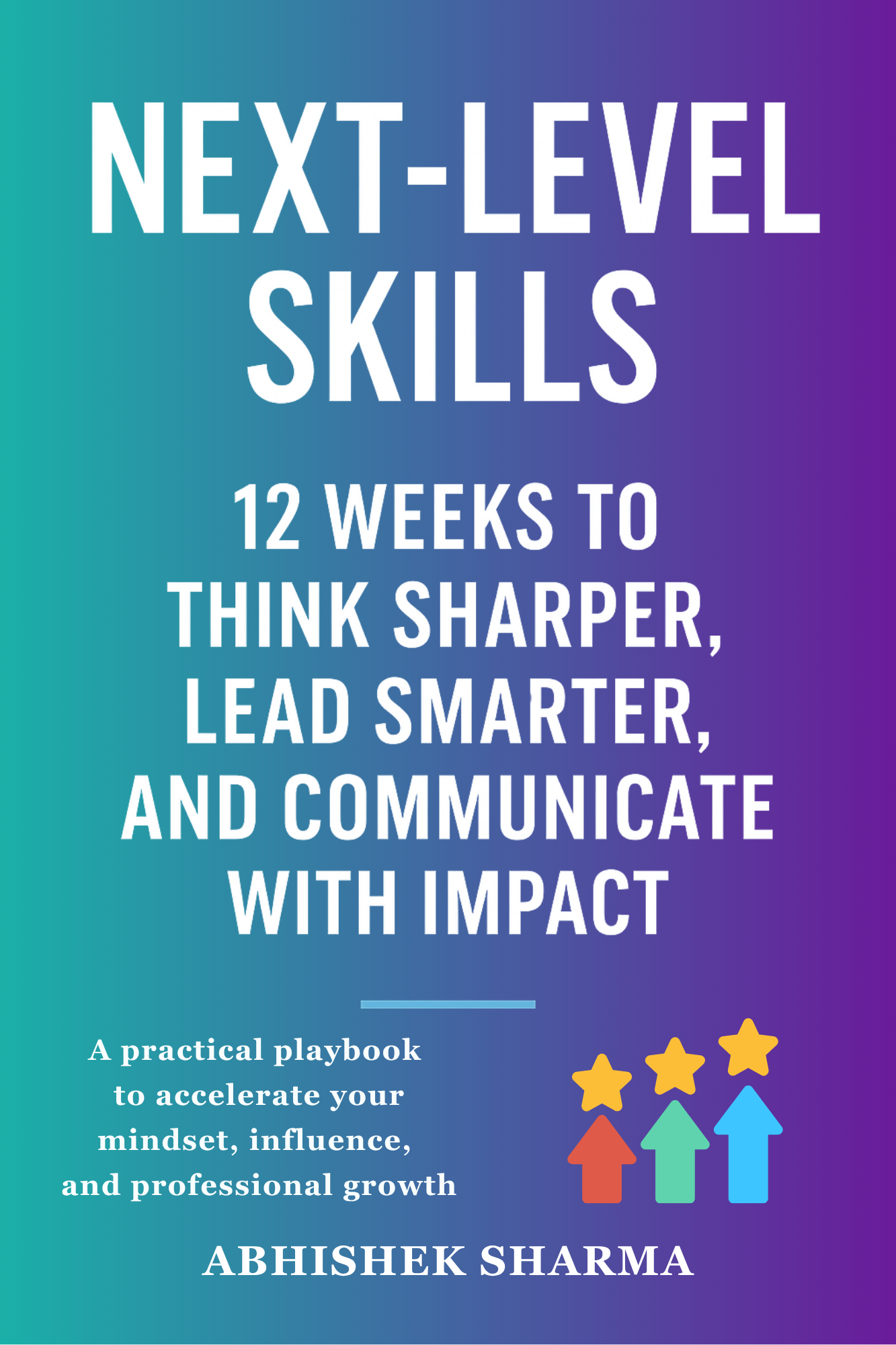
This and other essential skills are covered in Next-Level Skills — the book.
Learn more about the Book →A Challenge
Empathy grows when we intentionally practise it. This week, challenge yourself to:
Reflection Questions
Some Final Thoughts...
Empathy is not a weakness. It’s the strength that creates deeper trust, stronger teams, and more resilient relationships.
Empathy is a quality of character that can change the world.
— Barack Obama
Let’s choose to practise it every day – one conversation, one pause, one act of genuine understanding at a time.
Now over to you – what’s one moment when empathy made the biggest difference in your life? Let me know in comments.
Until Next Time,
Abhishek
Founder & CEO, LegiQ | Building Intelligent Edge Hardware
When was the last time empathy shifted the outcome of a conversation for you?
Do we believe empathy is more of a natural trait, or can it be developed with practice?
How does empathy change the way we lead teams in high-pressure situations?
In what ways can empathy create stronger business outcomes, not just stronger relationships?
How do we balance empathy with accountability so that standards do not slip?
Can empathy ever be a disadvantage in professional settings, and if so, how?
What practical strategies help us step into someone else’s shoes more effectively?
How can empathy be demonstrated in digital communication where tone and body language are missing?
How might empathy shape the future of leadership in a more AI-driven workplace?
What is one small empathetic action we could take today that would make a difference to someone around us?
Apply These Skills
- ✓Put the frameworks into practice this month.
- ✓Use the reflection prompts inside the book.
- ✓Build habits that compound over time.
This and other essential skills are covered in Next-Level Skills — the book.
Learn more about the Book →This edition is reserved for supporters
Subscribe free, then unlock every past edition with just 1 successful referral.
Subscribe Free →Enjoyed this edition?
Get the next one in your inbox — first week of every month.