Cultural Intelligence in Diverse Teams
Smarter Across Borders: Cultural Intelligence in Diverse Teams
Welcome back to another edition of Next-Level Skills. Each edition, we explore the human and leadership capabilities that help us navigate work and life more effectively. Skills that move beyond theory and into practical application.
A warm welcome to everyone who has joined our community since the last edition. Whether you've been with us since the beginning or have recently discovered the newsletter or the book, thank you for being part of this journey.
Today we’re exploring a skill that is becoming indispensable in our globalised world: Cultural Intelligence.
It’s not just about working with diversity but thriving because of it!
A Lesson from a Strategy Session
A few years ago, I was part of a cross-regional project team that included colleagues from Australia, India, and USA. We were in a strategy session, and tensions rose quickly. One American colleague grew frustrated with what he saw as “indirect communication,” while our Asian partners valued harmony and avoided open disagreement.
Initially, misunderstandings slowed everything down. But once we recognised the cultural dynamics at play, we shifted.
We built in pauses for reflection, encouraged more context around feedback, and gave space for both direct and indirect communication styles. Suddenly, decisions that once took hours of conflict became smoother, more inclusive, and far more effective.
That experience reinforced one truth for me:
Why Cultural Intelligence Matters
In today’s workplaces, diverse teams are the rule rather than the exception. Yet diversity alone doesn’t guarantee success.
It’s our ability to navigate differences in values, communication, and expectations that truly makes the difference.
That means simply having diversity isn’t enough. What matters is cultural intelligence, how well we understand, adapt to, and leverage those differences.
The Four Dimensions of Cultural Intelligence
Think about walking into a meeting where half the room prefers direct, fast-paced discussions and the other half values pauses, reflection, and harmony before decisions are made.
Without the right skills, we risk frustration, misinterpretation, and even conflict. With cultural intelligence, though, we can turn those differences into strengths.
Cultural intelligence can be broadly broken down into four dimensions. Each one acts like a compass, helping us navigate the complexities of diverse teams.
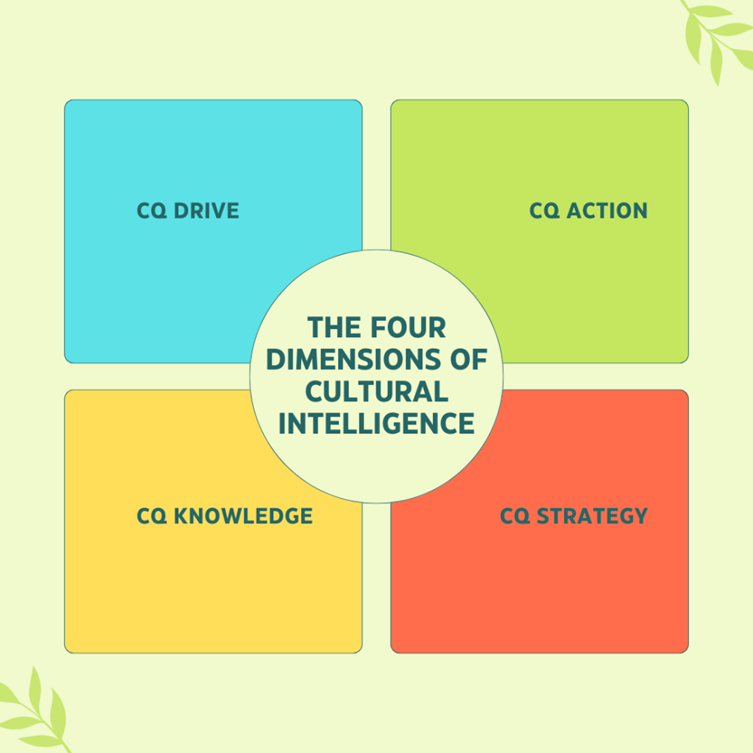
CQ Drive
This is our curiosity and motivation to engage with people from different cultures. Imagine joining a global project: if we see differences as obstacles, progress stalls. But if we lean in with genuine curiosity, those differences become opportunities to learn and innovate.
CQ Knowledge
This refers to our understanding of cultural values, norms, and practices. It doesn’t mean memorising every tradition, but it does mean recognising what shapes behaviour. For instance, knowing that some cultures value consensus while others prioritise speed helps us anticipate team dynamics before they derail.
CQ Strategy
Here, we plan and prepare for multicultural interactions. It’s not about having a script, but about anticipating where gaps might appear. A manager who notices that some colleagues stay silent in meetings might proactively create smaller breakout discussions to ensure all voices are heard.
CQ Action
This is where everything comes to life. It’s the ability to adapt our behaviour in real time, shifting how we communicate, listen, and respond. A leader who adjusts their presentation style for different audiences doesn’t just show respect — they build bridges that make collaboration smoother.
We create environments where differences are not barriers but catalysts for growth, creativity, and innovation. And that’s where diverse teams move from being good to being truly exceptional.
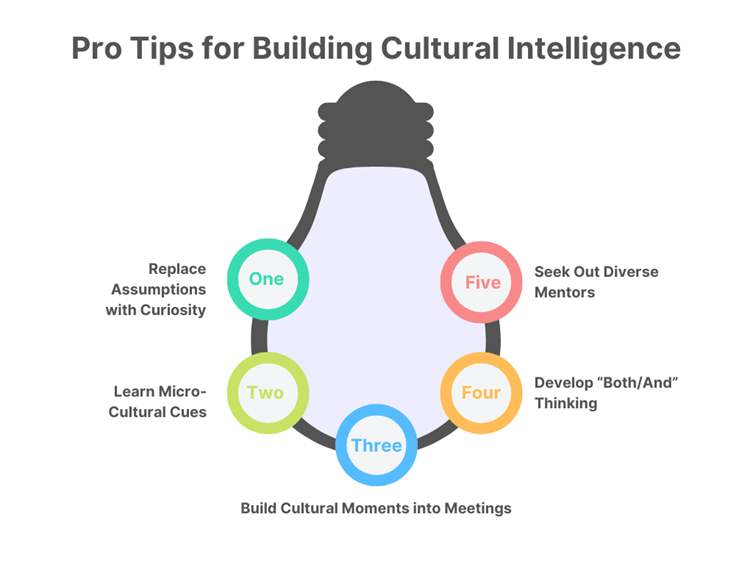
Pro Tip #1: Replace Assumptions with Curiosity
When encountering something unfamiliar, ask why might it be done this way? instead of judging it against our own norms.
Curiosity reduces defensiveness and opens doors to learning.
Pro Tip #2: Learn Micro-Cultural Cues
Small signals matter. For example, silence in some cultures shows respect, while in others it suggests disengagement.
Observing and clarifying helps prevent misinterpretations.
Pro Tip #3: Build Cultural Moments into Meetings
Allow space for diverse communication styles. This might mean pauses for reflection, encouraging quieter voices, or balancing direct and indirect approaches.
Cultural intelligence is less about having all the answers and more about pausing often enough to notice what is really happening between people.
Pro Tip #4: Develop “Both/And” Thinking
Instead of seeing one style as right and the other as wrong, ask: How can both approaches complement each other?
This mindset fosters inclusivity and innovation.
Pro Tip #5: Seek Out Diverse Mentors
Having mentors from different cultural backgrounds expands our perspective and challenges our unconscious biases.
Through their experience, mentors light paths we might otherwise overlook.
Each of these is about shifting from awareness to action.
Turning Diversity into Strength
When cultural intelligence becomes part of how we operate, diverse teams transform into high-performing teams.
Instead of clashing, differences spark creativity.
Instead of silence, respect builds trust.
No culture can live if it attempts to be exclusive.
— Mahatma Gandhi
The same applies to teams. Inclusivity is not optional. It is by-all-means essential.
This and other essential skills are covered in Next-Level Skills — the book.
Learn more about the Book →A Challenge
Cultural intelligence is built in small steps. Here’s how we can start this week:
Reflection Questions
Some Final Thoughts...
Cultural intelligence is about more than avoiding offence. It’s about unlocking the unique strengths of every voice at the table.
In a world where teams are increasingly global, our ability to work smarter across borders defines our growth, resilience, and leadership.
So let’s not just work in diverse teams : let’s thrive because of them.
Now over to you: what’s one cultural insight that has changed how you work with others?
Until Next Time,
Abhishek
Founder & CEO, LegiQ | Building Intelligent Edge Hardware
What’s the most valuable lesson you have learned from working with someone from a different culture?
How do we catch ourselves when unconscious biases start shaping our decisions?
In what ways can leaders demonstrate cultural intelligence without making it feel tokenistic?
How can we balance respecting cultural differences with ensuring team alignment on shared goals?
What are small, everyday actions that build stronger cross-cultural trust in teams?
How can organisations make cultural awareness part of daily practice rather than a one-off workshop?
Have you ever seen a culturally diverse team outperform because of, not despite, their differences?
What role does curiosity play in strengthening cultural intelligence?
How do we handle cultural misunderstandings in ways that deepen relationships rather than damage them?
What’s one tradition, practice, or mindset from another culture that has positively influenced how you work?
Gift the Book
- ✓A colleague stepping into leadership.
- ✓A team member navigating change.
- ✓A friend looking to take their next step professionally.
This and other essential skills are covered in Next-Level Skills — the book.
Learn more about the Book →This edition is reserved for supporters
Subscribe free, then unlock every past edition with just 1 successful referral.
Subscribe Free →Enjoyed this edition?
Get the next one in your inbox — first week of every month.