Leading When No One Is Watching
The Truest Test of Character
Welcome back to another edition of Next-Level Skills. Each edition, we explore the human and leadership capabilities that help us navigate work and life more effectively. Skills that move beyond theory and into practical application.
A warm welcome to everyone who has joined our community since the last edition. Whether you've been with us since the beginning or have recently discovered the newsletter or the book, thank you for being part of this journey.
This month, we're exploring something that never shows up on a performance review, yet quietly defines every leader we've ever truly respected:
Because character isn't revealed in the moments we're being evaluated. It's revealed in the moments we're sure we aren't.
The Error No One Would Have Caught
Late one night, finishing a report ahead of an early client call, I found a small but real error buried in a section I'd already signed off on.
It was minor enough to go unnoticed. The deadline had passed. No one on the client side would have known the difference, and no one on my side was going to check.
Almost no one would have blamed me for sending it as is.
I stayed back and fixed it anyway.
Not because someone was watching, there wasn't. But because the version of me that fixes it when no one's checking is the same version of me that shows up everywhere else, whether I like it or not.
That report went out on time and correct. No one ever knew there'd been a choice to make. But I did, and that's exactly the point.
And that is why leading when no one is watching deserves far more attention than it usually gets, especially in a world that mostly rewards what gets seen.
Why Visible Effort Isn't the Same as Real Integrity
Integrity is not built in the moments everyone sees.
It is built in the unwatched decisions, the ones that never make it into a report, a review, or a story you'd tell.
The challenge is that visible effort is easy to reward.
The late night that others noticed feels significant.
The quiet fix that no one noticed feels invisible, almost pointless.
And so, without meaning to, we can start optimising for what gets seen rather than what's actually right.
Every corner cut in private, every shortcut no one would catch, every "good enough" sent out because checking felt unnecessary, these don't show up anywhere. But they accumulate, quietly, into exactly who we become.
The instinct is to treat integrity as something we display when it counts. In reality, it is something we practice constantly, especially when it doesn't seem to count at all.
The Myth of the "Harmless" Shortcut
Many people believe small, unwitnessed shortcuts don't really matter, that they're separate from who we are, isolated exceptions rather than patterns.
What actually shapes character is the accumulation of exactly these moments.
One shortcut rarely causes visible damage.
But it makes the next one easier to justify.
And it is that quiet erosion, far more than any single dramatic failure, that eventually catches up with a person, in ways they rarely see coming.
"Integrity is doing the right thing, even when no one is watching."
— C.S. Lewis
The goal should not be to look consistent in front of others. It should be to be consistent whether or not there's anyone in the room.
What Leaders With Real Integrity Do Differently
Across teams and careers, leaders who are trusted at the deepest level tend to do several things consistently.
- →They hold the same standard privately that they display publicly.
- →They fix what's wrong even when disclosing it would cost them nothing.
- →They give themselves the same scrutiny they'd expect from someone checking their work.
- →And they treat unwitnessed decisions as seriously as the ones everyone will see.
In other words, they make themselves the same person in every room, including the empty ones.
That approach rarely earns instant recognition. But it dramatically shapes the kind of trust that outlasts any single achievement.
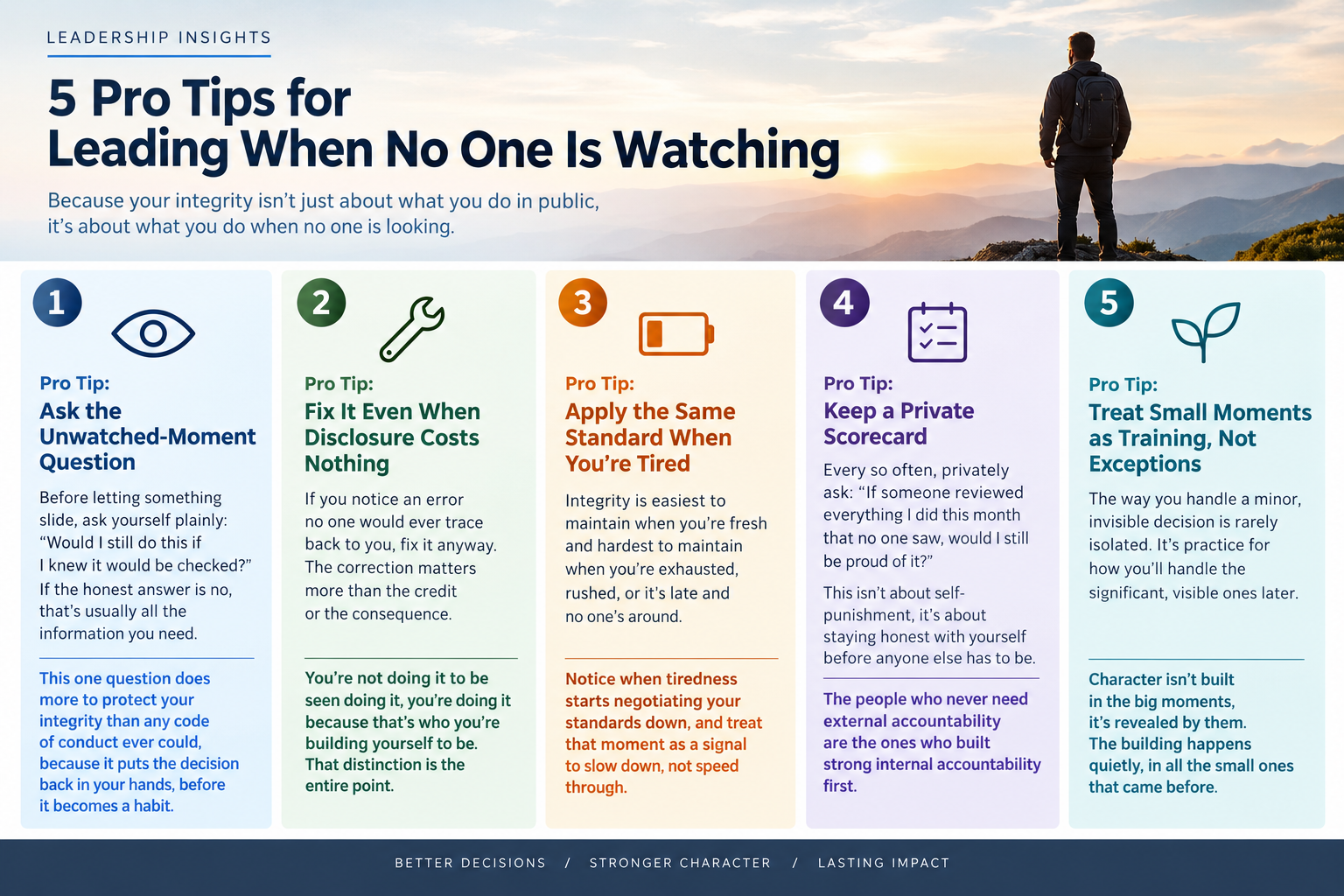
Pro Tip: Ask the Unwatched-Moment Question
Before letting something slide, ask yourself plainly: "Would I still do this if I knew it would be checked?" If the honest answer is no, that's usually all the information you need.
This one question does more to protect your integrity than any code of conduct ever could, because it puts the decision back in your hands, before it becomes a habit.
Pro Tip: Fix It Even When Disclosure Costs Nothing
If you notice an error no one would ever trace back to you, fix it anyway. The correction matters more than the credit or the consequence.
You're not doing it to be seen doing it, you're doing it because that's who you're building yourself to be. That distinction is the entire point.
Pro Tip: Apply the Same Standard When You're Tired
Integrity is easiest to maintain when you're fresh and hardest to maintain when you're exhausted, rushed, or it's late and no one's around. That's exactly when it matters most.
Notice when tiredness starts negotiating your standards down, and treat that moment as a signal to slow down, not speed through.
Pro Tip: Keep a Private Scorecard
Every so often, privately ask: "If someone reviewed everything I did this month that no one saw, would I still be proud of it?"
This isn't about self-punishment, it's about staying honest with yourself before anyone else has to be. The people who never need external accountability are the ones who built strong internal accountability first.
Pro Tip: Treat Small Moments as Training, Not Exceptions
The way you handle a minor, invisible decision is rarely isolated. It's practice for how you'll handle the significant, visible ones later.
Character isn't built in the big moments, it's revealed by them. The building happens quietly, in all the small ones that came before.
Why This Skill Matters More Than Ever
Today's work environment gives unwatched moments more room to exist, and more consequence when they compound, than at almost any point before.
- →More work happens asynchronously, with fewer people ever seeing how it actually got done.
- →Remote and hybrid setups mean oversight is thinner, and self-accountability carries more of the weight.
- →And as roles become more autonomous, the gap between what's checked and what's trusted keeps widening.
In this environment, the ability to lead yourself well when no one is watching has become one of the most quietly valuable traits a person can build.
Because supervision gets thinner as trust grows. It's integrity that determines whether that growing autonomy is deserved, or eventually taken back.
That is where real credibility, the kind that doesn't need to be monitored, is built.
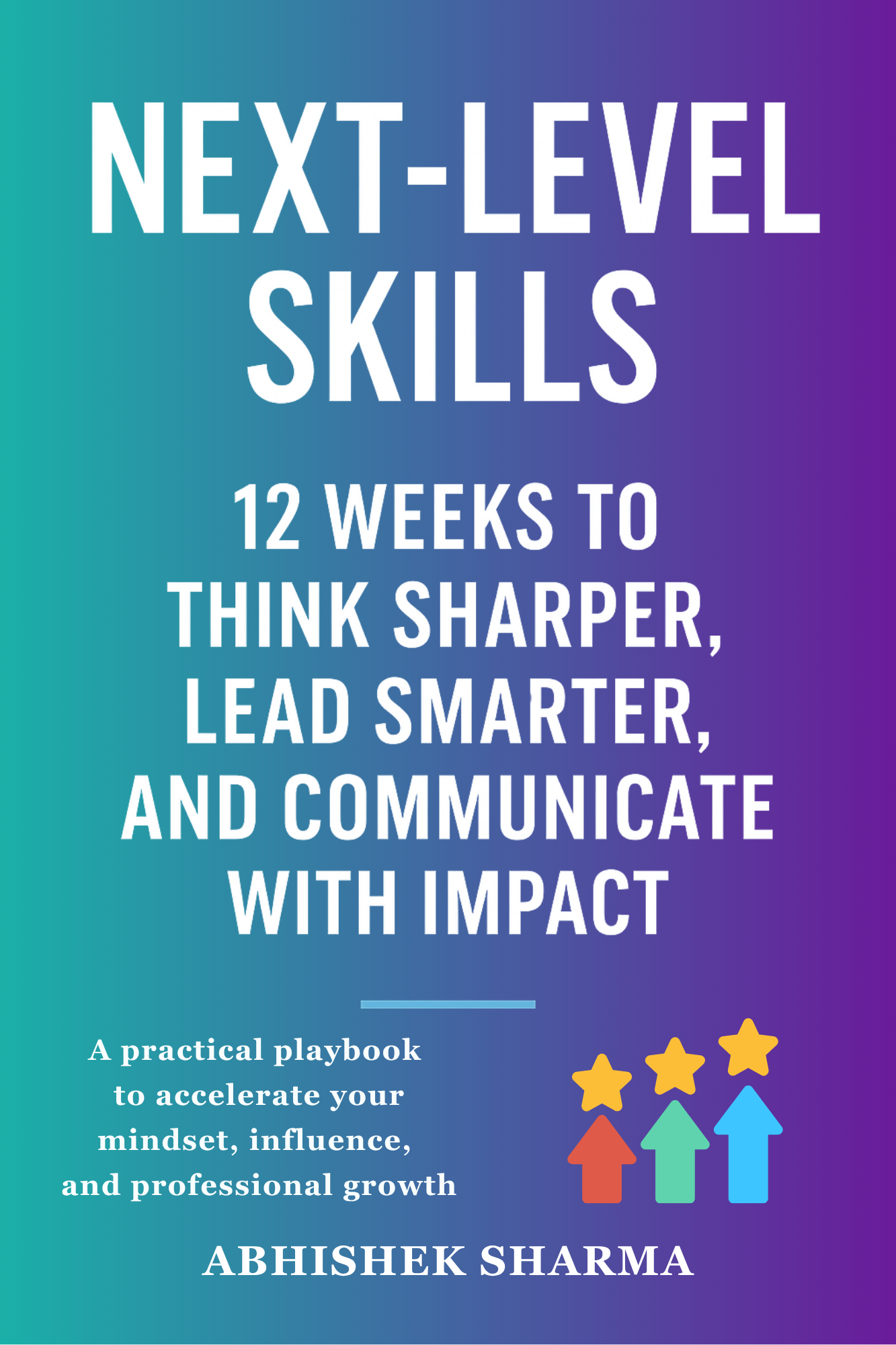
This and other essential skills are covered in Next-Level Skills — the book.
Learn more about the Book →A Reflection for This Month
Think about a recent decision you made that no one else would ever have seen or checked.
Reflection Questions
The answers to those questions often reveal more about our leadership than any single achievement does.
Some Final Thoughts...
Real character is rarely built in front of an audience. It is built in the moments that never make it into the story.
The leaders we trust most deeply are not those with the most impressive public track record.
They are the ones who hold themselves to the same standard whether or not anyone is ever going to know.
"Real integrity is doing the right thing, knowing that nobody's going to know whether you did it or not."
— Oprah Winfrey
That quiet consistency, chosen again and again with no one keeping score, is what leading when no one is watching really means. And ultimately, it is what earns the kind of trust that never needs to be checked.
Until Next Month, keep showing up the same way, seen or unseen.
Abhishek
Founder & CEO, LegiQ | Building Intelligent Edge Hardware
Gift the Book
- ✓A colleague stepping into leadership.
- ✓A team member navigating change.
- ✓A friend looking to take their next step professionally.
This and other essential skills are covered in Next-Level Skills — the book.
Learn more about the Book →Enjoyed this edition?
Get the next one in your inbox — first week of every month.