Leadership Without Authority
Leadership Without Authority: Influencing Without a Title
Welcome back to another edition of Next-Level Skills. Each edition, we explore the human and leadership capabilities that help us navigate work and life more effectively. Skills that move beyond theory and into practical application.
A warm welcome to everyone who has joined our community since the last edition. Whether you've been with us since the beginning or have recently discovered the newsletter or the book, thank you for being part of this journey.
This week, we dive into Leadership Without Authority — a skill that enables us to inspire, influence, and drive meaningful change, even when we don’t hold a formal leadership title. True leadership isn’t about a job title — it’s about mindset, actions, and the ability to motivate and empower those around us.
When Leadership Had Nothing to Do with a Title
Once I worked on a cross-functional project with no designated team leader. Each department had its own priorities, and without clear direction, meetings often ended in confusion. While I wasn’t in a managerial role, I saw an opportunity to bring structure to the chaos.
Instead of waiting for someone to take charge, I began facilitating discussions, summarising key points, and ensuring follow-ups were assigned. I asked thoughtful questions, encouraged quieter team members to share their input, and kept the focus on shared objectives. Over time, the team naturally started looking to me for direction — even though I had no official authority.
By the time the project was completed, I realised something important: leadership isn’t about having power over people — it’s about empowering them to work towards a common goal.
What is Leadership Without Authority?
Leadership without authority is the ability to influence, inspire, and drive change without relying on positional power. It’s about earning trust, demonstrating expertise, and fostering collaboration to move initiatives forward.
Leadership is not about titles, positions, or flowcharts. It is about one life influencing another.
— John Maxwell
In a world where collaboration and adaptability are essential, the ability to lead without authority is more valuable than ever.
Why Leadership Without Authority Matters
Many of us operate in environments where decision-making is decentralised, and success depends on cross-functional collaboration. The ability to lead without formal authority provides key advantages:
- 1Builds InfluenceWe gain trust and respect by demonstrating expertise and reliability.
- 2Enhances Problem-SolvingStrong informal leaders drive discussions that result in better decisions.
- 3Strengthens CollaborationTeams work better when individuals step up to facilitate progress.
- 4Creates Career GrowthLeading without authority signals readiness for greater responsibilities.
- 5Increases Organisational ImpactChange happens faster when leadership is distributed rather than confined to hierarchy.
Mastering this skill allows us to become catalysts for progress, regardless of our position.
The Core Principles of Leading Without Authority
Leading without authority requires a different approach from traditional leadership. Without a formal title to rely on, influence must be built through trust, collaboration, and expertise.
By focusing on key leadership principles, we can create impact and drive meaningful change, regardless of our position.
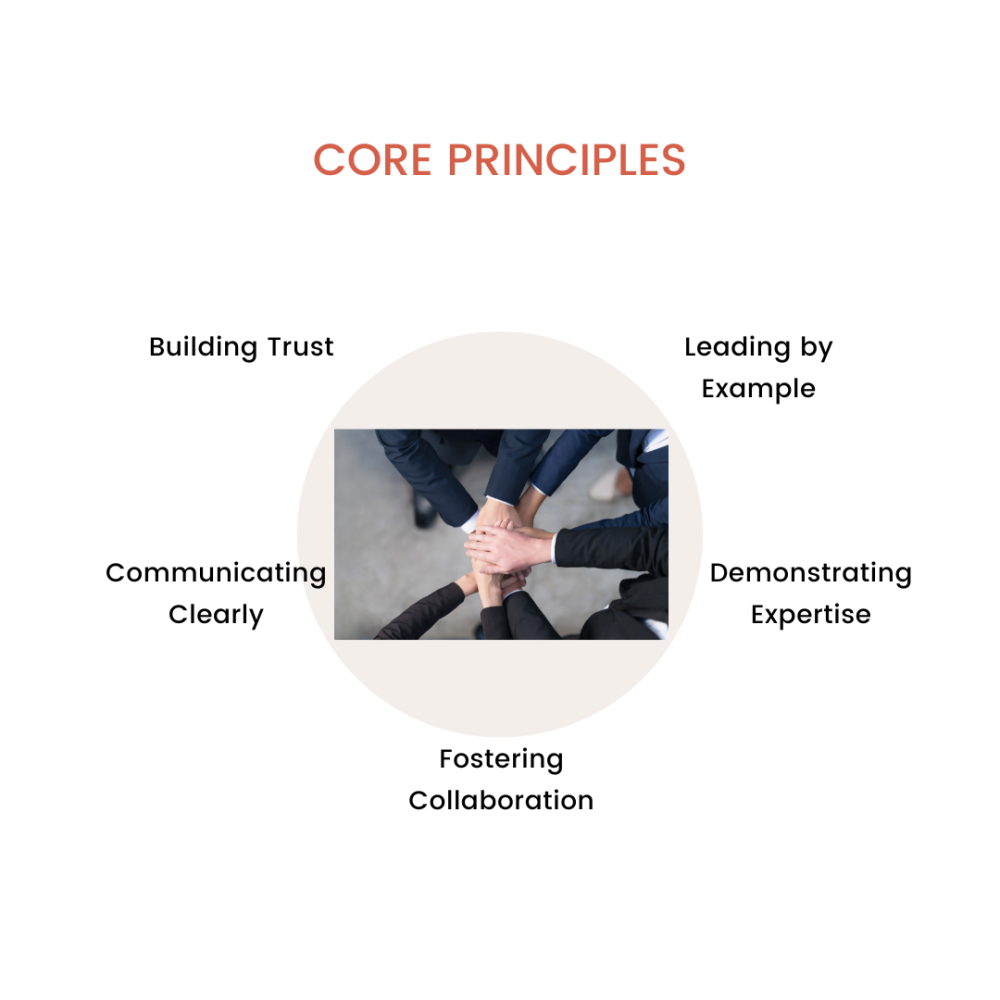
Strong informal leaders focus on:
- 1Building TrustConsistency, transparency, and reliability earn credibility.
- 2Communicating ClearlyClarity ensures alignment and prevents misunderstandings.
- 3Fostering CollaborationLeadership is about bringing people together, not working in silos.
- 4Demonstrating ExpertiseKnowledge and problem-solving ability establish influence.
- 5Leading by ExampleOur actions speak louder than our job titles.
When we lead with trust, clarity, and collaboration, people naturally look to us for direction and guidance. These principles create the foundation for influence, allowing us to step into leadership roles even without formal authority.
Now, let’s translate these principles into actionable strategies that help us develop and strengthen our ability to lead from any position.
Practical Tips for Leading Without Authority
Stepping into leadership without a formal title requires intentional actions that build credibility, foster collaboration, and inspire trust.
Influence is not gained overnight — it is cultivated through consistent behaviour, clear communication, and a willingness to support others.
By adopting key strategies, we can establish ourselves as leaders, regardless of hierarchy or job title.
Develop Strong Communication Skills
Clear, concise, and persuasive communication is the foundation of influence. The way we frame ideas can determine whether they are embraced or dismissed.
Pro Tip: Instead of saying, “This process isn’t working,” reframe it as, “Here’s a way we could improve efficiency while maintaining quality.”
Build Relationships Before You Need Them
Trust and influence are built over time, not in moments of crisis. Make an effort to connect with colleagues across teams.
Pro Tip: Take time to understand team members’ priorities and challenges so that when collaboration is needed, there’s already a foundation of trust.
Ask Thought-Provoking Questions
The ability to ask insightful questions can shift discussions, uncover blind spots, and encourage critical thinking.
Pro Tip: In a meeting, instead of giving direct instructions, ask, “What potential challenges do we see in this approach, and how can we address them?”
Take Initiative and Be Solution-Oriented
People naturally follow those who bring solutions rather than just highlighting problems. Proactive problem-solving builds credibility.
Pro Tip: If a project is stalling due to misalignment, propose a structured approach for resolving differences and moving forward.
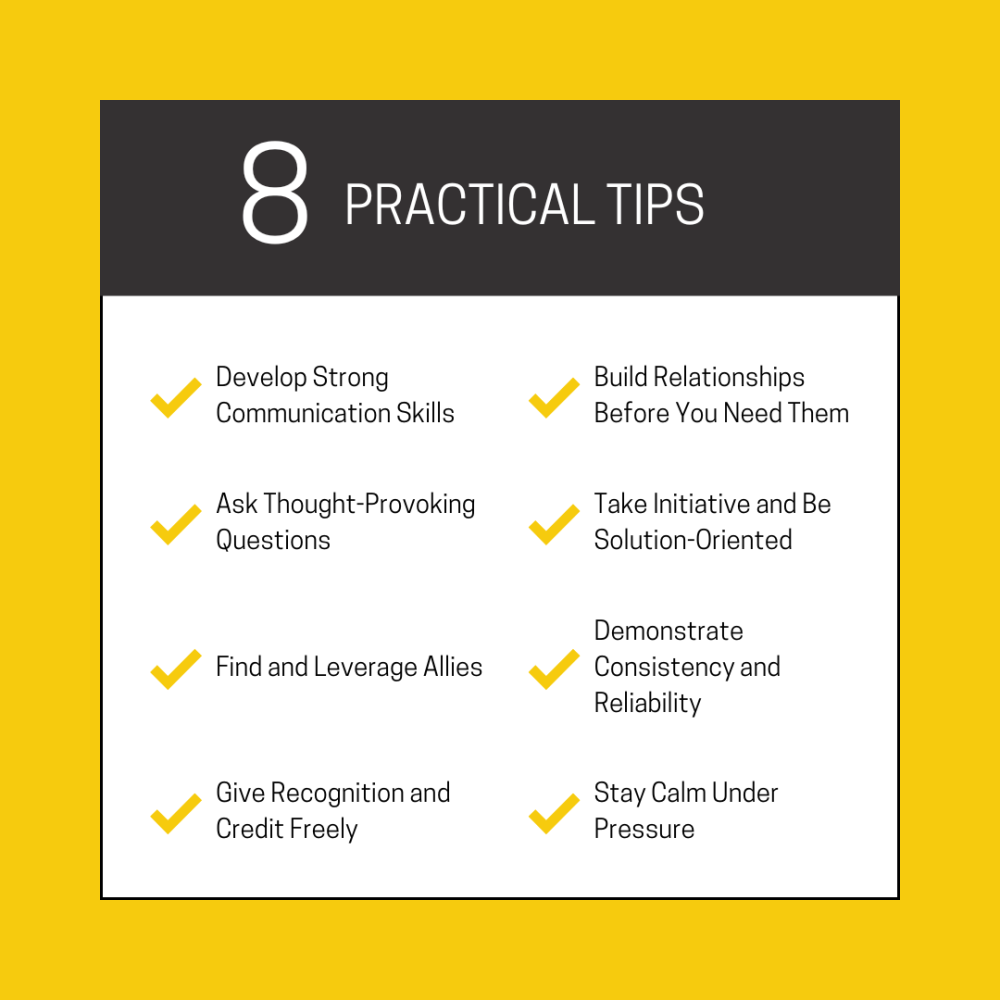
Find and Leverage Allies
Leading without authority is easier when we have supporters. Identify key influencers and build alliances.
Pro Tip: If implementing a new process, engage respected team members early to advocate for the change.
Demonstrate Consistency and Reliability
Leadership is built on trust, and trust is built through consistency. Follow through on commitments to establish credibility.
Pro Tip: If we promise to share an update by Friday, ensure it’s delivered on time. Reliability strengthens influence.
Give Recognition and Credit Freely
Genuine appreciation fosters goodwill and strengthens relationships. Leaders who uplift others gain natural influence.
Pro Tip: Publicly acknowledge a colleague’s contribution in a meeting: “Thanks to [Name] for their insights — this approach has been invaluable to the team.”
Stay Calm Under Pressure
In moments of tension, people look to those who remain composed. A steady, level-headed approach fosters confidence.
Pro Tip: If faced with last-minute project changes, focus on next steps rather than dwelling on setbacks.
By applying them consistently, we create an environment where influence is built on respect and expertise rather than position.
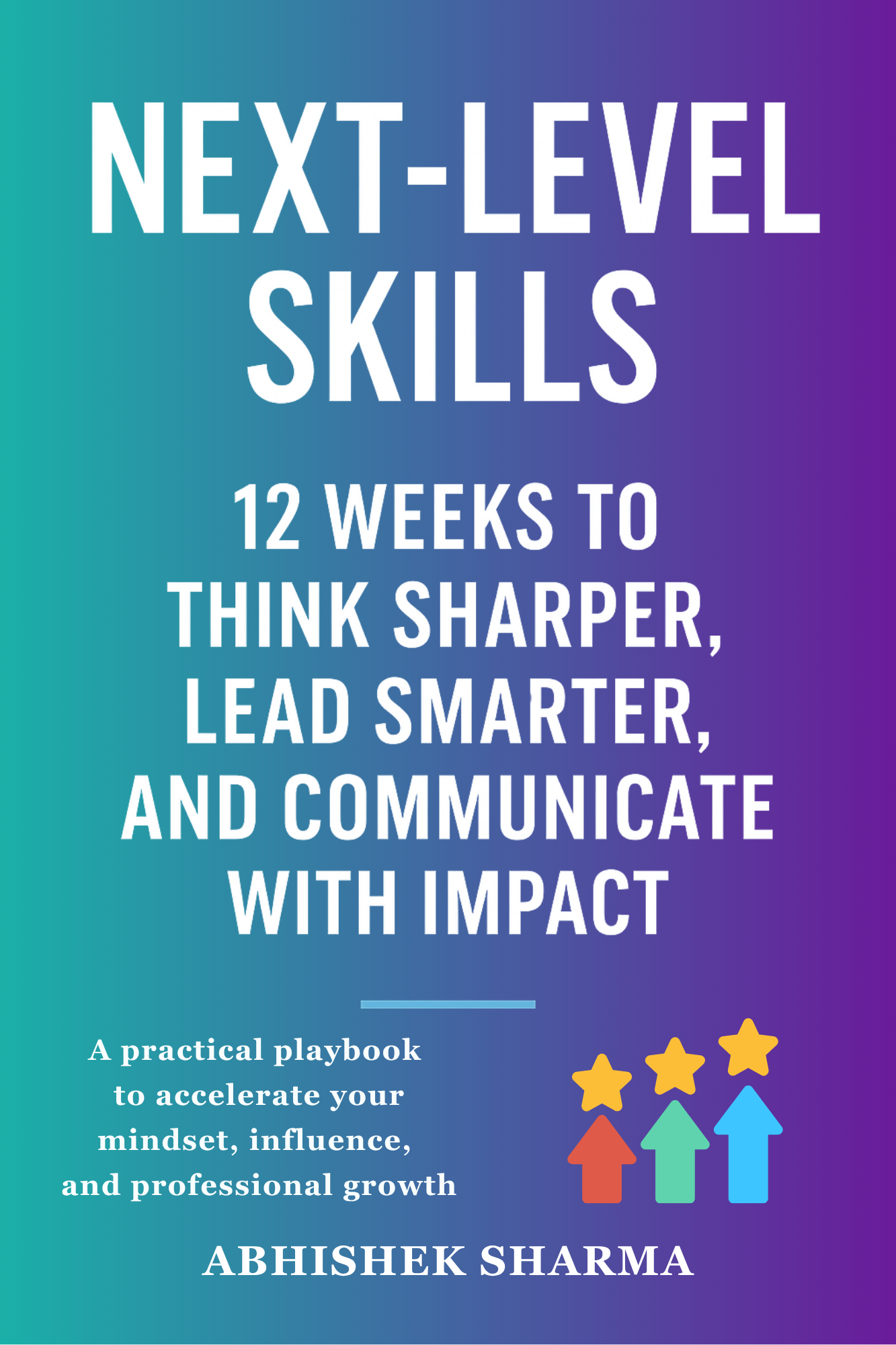
This and other essential skills are covered in Next-Level Skills — the book.
Learn more about the Book →A Challenge
This week, take a moment to reflect on how you could practise leadership without authority. Ask yourself:
Reflection Questions
Some Final Thoughts...
Leadership is not about waiting for permission — it’s about stepping up, taking ownership, and making an impact where it matters. When we lead with influence, credibility, and collaboration, we create positive change without needing a title to do so.
“A boss has the title. A leader has the people.”
— Simon Sinek
Leadership without authority is about inspiring action, fostering trust, and helping others succeed.
Thank you for being part of Next-Level Skills! I’d love to hear — how have you demonstrated leadership without a formal title? Let’s learn from each other’s experiences.
Until Next Time,
Abhishek
Founder & CEO, LegiQ | Building Intelligent Edge Hardware
What’s an example of a time when you influenced a decision without having formal authority?
How do we ensure we’re being seen as helpful and not overstepping boundaries?
What’s the biggest challenge you’ve faced when trying to lead informally?
How do we build credibility and trust when we don’t hold a leadership position?
What’s one leadership quality you’ve developed without having an official leadership title?
What strategies have worked for you in influencing cross-functional teams?
How do we encourage others to step up as informal leaders?
How do we handle resistance when trying to lead without a title?
How can organisations create a culture where leadership without authority is encouraged?
What role does emotional intelligence play in leading without authority?
Gift the Book
- ✓A colleague stepping into leadership.
- ✓A team member navigating change.
- ✓A friend looking to take their next step professionally.
This and other essential skills are covered in Next-Level Skills — the book.
Learn more about the Book →This edition is reserved for supporters
Subscribe free, then unlock every past edition with just 1 successful referral.
Subscribe Free →Enjoyed this edition?
Get the next one in your inbox — first week of every month.